Antique Alchemy: Romance, Ritual and the Return to Character
Old films, Art Nouveau lines and evenings lit by lamps. At twenty six, Ráchel Cestrová belongs to a generation that does not turn to the past out of nostalgia, but out of conviction. Born in Jičín, in the heart of the Bohemian Paradise, and now living in Hradec Králové — the Salon of the Republic — she has been drawn to the atmosphere of past decades since childhood. From Poirot to classic Czech cinema, with Hotel Modrá hvězda holding a special place in her heart, she built a visual world shaped by history, detail and mood. Together with her husband, an artist, she now creates a home where old objects are given a new life and another chapter. Through her Instagram project Domicile Dekorace (@domiciledekorace), she shares this evolving world with her community.
Her journey began not as a carefully structured concept, but with furnishing their own apartment. “I started searching in flea markets and antique shops, partly for the atmosphere and honestly also for the prices,” she admits. Gradually she realized how many beautiful things already exist — things with history and character — and how much closer they feel to her than anything mass produced. What started as sourcing for herself quietly evolved into something deeper. She does not speak of energy, but of the effect objects have on us. When she talks about old oil lamps, her voice softens: “I always imagine how many evenings they have witnessed. How many conversations, moments of silence, ordinary and important moments.”
One of the most extraordinary pieces she treasures is a glass decanter set featuring Snow White and the Seven Dwarfs, dating back to the late 1930s. Created at the height of the film’s early success in Central Europe, the set carries not only hand painted gold details but also echoes of a turbulent era — when local craftsmen interpreted global icons and stories were shadowed by history. “It would already be beautiful on its own,” she says. “But knowing its story changes everything.”
For Ráchel, vintage is not a trend. It is a way of slowing down, observing more carefully and bringing depth back into a space. “It does not have to be everywhere. One strong piece is enough to anchor a room. The rest is about feeling rather than rules.” In the evenings, a candle is always lit in an old candlestick. No harsh overhead lighting — only lamps and candlelight that soften and quiet the space. She describes herself as someone who is, at heart, an entrepreneur — with a head full of ideas and a deep respect for the time and patience good things require.
How did your journey begin — were you a passionate collector, or was it a well-thought-out concept from the start?
It started quite simply — by furnishing our home with my husband. We both gravitate toward old, slightly château-like styles, and we quickly realized that it did not work very well with new furniture. So I began searching at flea markets and antique shops — partly for the atmosphere, but honestly also because of the prices.
And that was when it struck me — how many beautiful things already exist in the world. Things with history and character. And how much closer they feel to me than anything mass-produced. At that point, sourcing pieces for ourselves quietly became a hobby.
The turning point came when I came across a woman from America who was selling vintage décor — beautifully photographed, with a story behind each piece. I thought, this is exactly it. At the time, it felt to me like no one in the Czech Republic was doing it in such a personal way… so I simply tried it. Only later did I find out that someone actually was — but that is another chapter.
How would you describe your style in three words?
Romantic, elegant and a little extravagant. But I admit that I am the kind of person whose style changes every morning depending on my mood. And I actually enjoy that — just like with vintage pieces, nothing is ever completely fixed.
Do you believe old pieces carry energy? What was the most soulful or significant object that has passed through your hands?
I would not call it energy exactly. More like a certain effect objects have on you. There are pieces where I instantly think, wow, I need this at home — and then there are the subtle ones that win you over gradually. Once you research their origin and discover the story behind them, you start seeing them differently.
For me, old oil lamps carry a very strong, calm atmosphere. I always imagine how many evenings they have witnessed — how many conversations, moments of silence, ordinary and important events. And how differently people spent their evenings back then, without screens, simply by lamplight. Perhaps that is what people today call the “soul” of things.
Where do you think people can find the best vintage treasures — flea markets, auctions, or hidden storage spaces?
I do not think there is one specific place where treasures can be systematically “hunted.” Vintage, to me, is largely about chance and about time — something that cannot really be planned. The most beautiful things often appear when you are not looking for them at all. Personally, I am closest to overcrowded storage spaces full of old objects, where you have to dig a little, take your time and look carefully. That is where you find pieces that might otherwise remain hidden.
And if I have to be specific, my heart belongs to Italy — not only because of its aesthetics, but also because of the way old objects are still treated there.
“There are so many beautiful things in this world that already exist. Things with history and character feel closer to me than anything mass produced.”
Is there a piece in your home that you are especially proud of? How did you find it?
Yes, I have one such piece at home and I feel a very strong connection to it. It is a porcelain, hand-painted kitten from Germany. Originally, I tried to win it at auction, but I did not succeed — and I admit I was very disappointed at the time. Later came an even bigger surprise. My husband is an excellent collector and somehow, in a way I still do not fully understand, he managed to find the kitten among the very limited number of surviving pieces across Europe. He gave it to me as an anniversary gift.
Since then, this small porcelain object has not only been a beautiful piece, but also a reminder that some objects find their way to us on their own — just not always at the moment when we want them most.
Have you ever discovered a piece with an incredible story behind it?
This discovery is more my husband’s achievement, but I am incredibly proud of it to this day. It is a glass decanter with six shot glasses featuring Snow White and the Seven Dwarfs. The decanter shows Snow White and one dwarf, and each glass features one dwarf. The set dates from the late 1930s or early 1940s — made of frosted glass combined with clear glass, with gold decoration applied during production and hand painting. On its own, it would already be a beautiful antique piece, but its story takes it even further. It was created at a time when Snow White was a huge phenomenon — shortly after the film was released in 1938 with Czech dubbing. That dubbing is still surrounded by many mysteries. The role of Snow White was voiced and sung by a Jewish artist who is said to have later been deported to a concentration camp, and there are even assumptions that the Nazis attempted to destroy copies of the film. Despite being shown only briefly, the film was a massive success and its songs quickly spread among people. This set comes precisely from that period — when Disney was only beginning to think about merchandising and could not cover the entire world. Local craftsmen therefore created their own interpretations. Similar decanters can still be found today, but each is different. This particular one closely matches the original Disney visual style — and that is why it feels so exceptional to me.
What is your trick for combining vintage pieces with modern interiors so that it feels natural?
For me, it starts with colors and textures. When something new, clean and simple meets something old, patinated and slightly imperfect, a natural contrast emerges. For example, combining new white with old gold almost always works — it is calm, yet full of character. I also try to follow the rule that vintage needs space to breathe. It does not have to be everywhere — one strong piece is enough to anchor the interior and give it a story. The rest is more about feeling than about rules.
What three questions should we ask ourselves before bringing a vintage piece home?
Is there immediate chemistry between us, or do I have to convince myself? Will I actually use it, or will I only display it? Will it naturally find its place in my home without me having to change the entire space around it?
Do you have a secret vintage guilty pleasure?
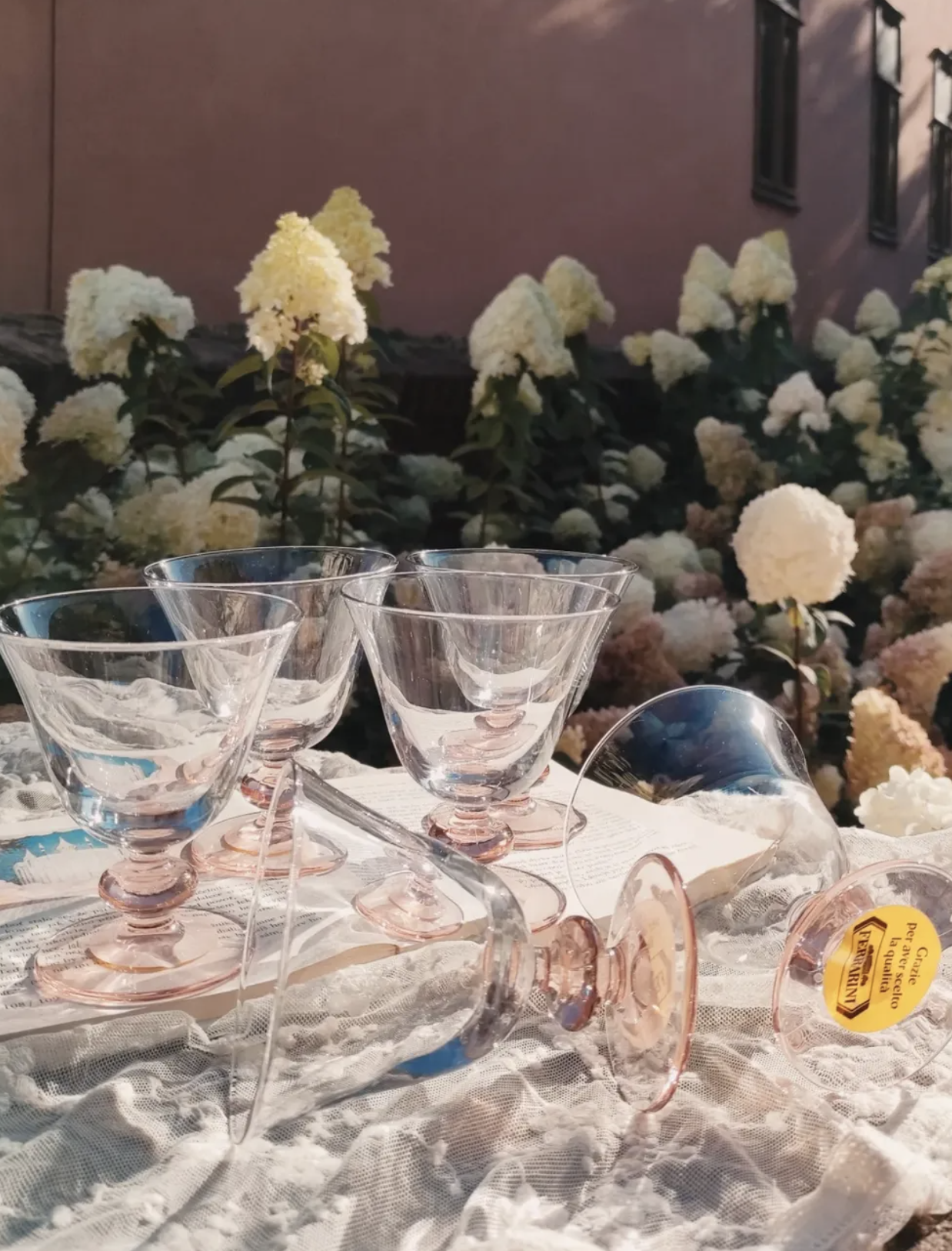
Definitely glasses. Ideally, I would need different ones for every type of drink, even though I no longer have space for them. We have quite a lot at home, often just single pieces. I love that each drink calls for its own shape and atmosphere — one glass for a cocktail, another for sparkling wine, and another perhaps for rum from Mauritius. For some people it might seem unnecessary or kitsch, but for me it is a small detail that can transform an ordinary evening into a celebratory moment.
Is there a ritual or object you cannot imagine your day without?
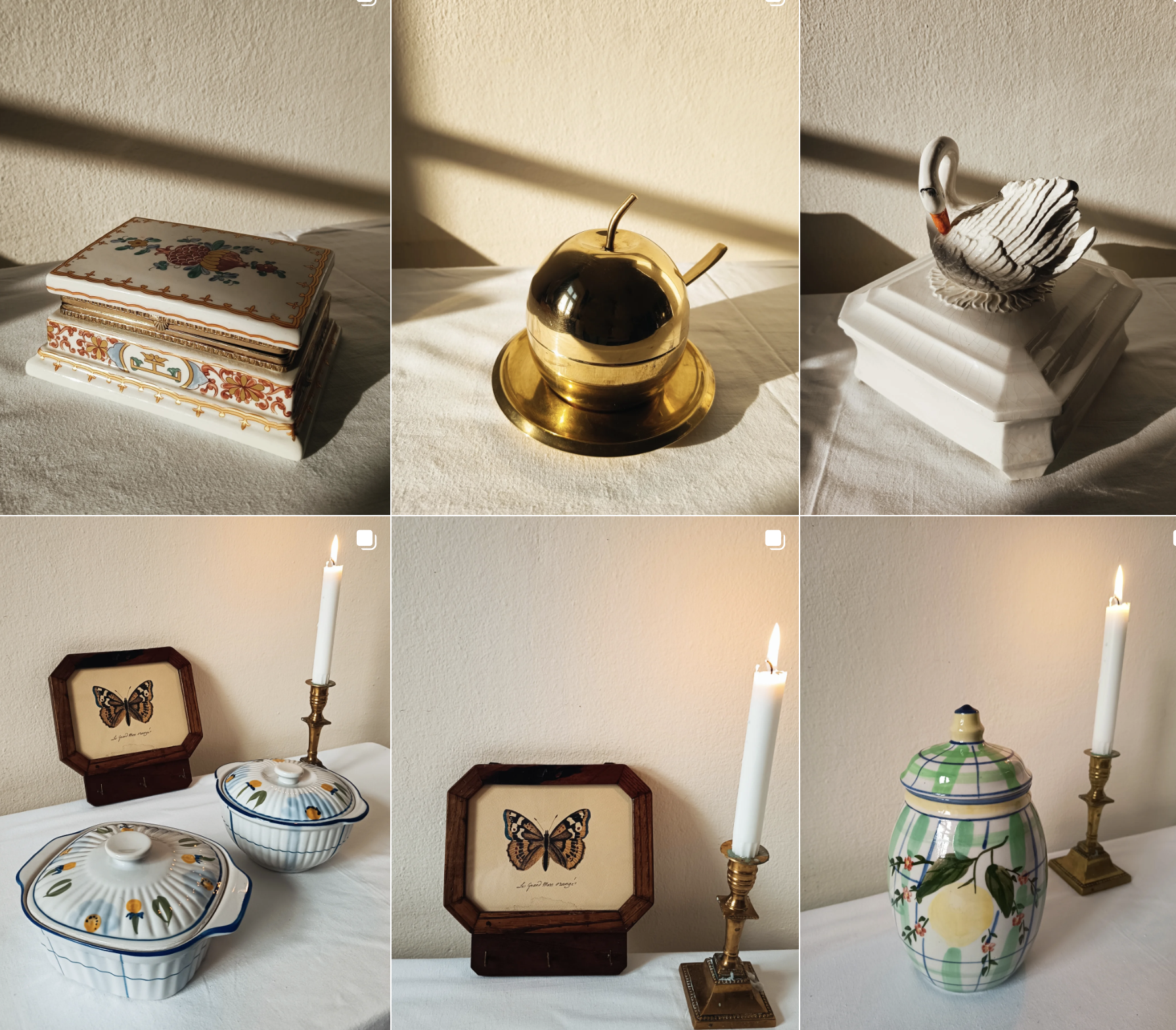
Every evening we light a candle in old candlesticks. For me, it is a small transition from the day into calmness. At home, we almost never use strong overhead lighting — we prefer table lamps and candles that soften and slow down the space. It is a simple step, but for me it makes an enormous difference.