Creating Jewellery That Outlives Trends: Inside the World of Anna Kristyna Sion
There are creators who react to the world around them. And then there are those who turn inward — toward memory, roots and stories that existed long before us and will remain long after we’re gone. Anna Kristyna Sion belongs to the latter. Her jewellery does not emerge as a response to trends, but as quiet, steady points in time. Objects that carry value — material, emotional, and ancestral.
In this Behind the Brand interview, we return to the very beginning: to a childhood spent opening drawers filled with jewellery, to a grandmother who left behind not clothes, not everyday objects, but small artefacts of memory. We speak about the decision to leave the world of fashion in favour of jewellery that does not follow seasons — objects that are not worn out, but passed on. Jewellery as an amulet, an investment, a keepsake. For Anna, jewellery is not decoration; it is a vessel for stories.
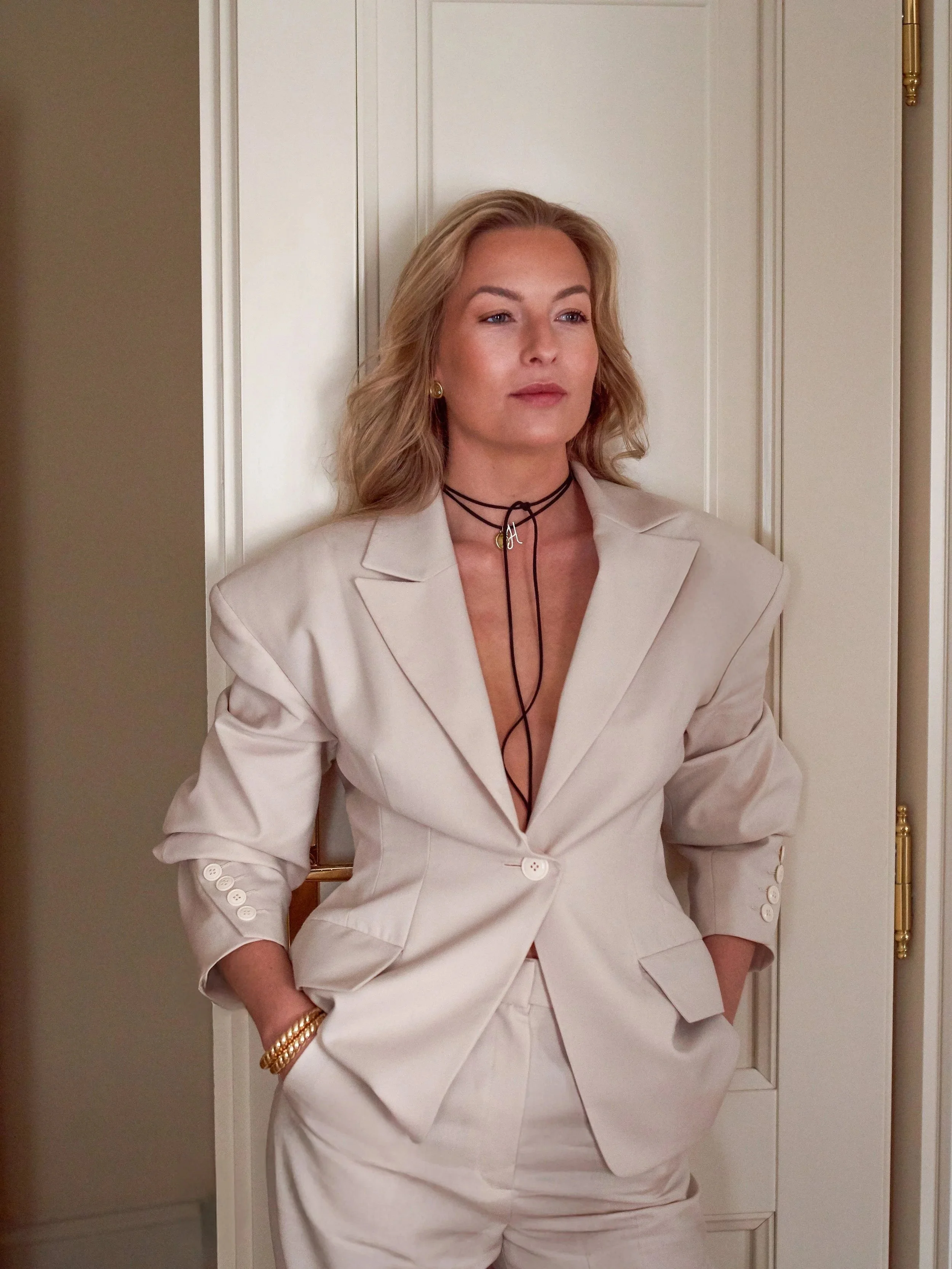
The interview was created in Malá Strana, a place deeply personal to Anna. Here, her life memories meet the aesthetics of Prague — history, architecture, and the quiet magic of space. A place where she once performed theatre now frames a conversation about craftsmanship, family crests, heraldry, working with diamonds and stones with “imperfections” — which she considers the most beautiful of all.
About jewellery born from love, loss, separation, and new beginnings. Rings as memories, wedding bands transformed after divorce, pieces created after transplants, births, and the loss of loved ones.
Anna Kristyna Sion speaks openly about her formative connection with Asia and the IMPRINT brand, about designing a crown for Miss Supranational, about motherhood and how it reshaped her relationship with value and time, and about the SIGNET Collection — personal insignias that allow women to reconnect with their roots. About why minimalism is not her language. And why she believes that without knowing where we come from, we cannot have a solid foundation.
Behind the Brand is not merely a conversation about a label. It is a conversation about memory, continuity, and the courage to create objects not meant for a moment — but for a lifetime
Styling: Roji Suit, Anna Kristyna Sion her own jewellery
You grew up imagining a career in fashion — yet your path ultimately led you to jewellery. When did you realise you wanted to create something that would outlive generations?
It was during my fashion design studies in Prague that I realised this field simply wasn’t for me. I don’t like how fashion constantly changes — you’re always expected to release new collections, and what was worn last year is suddenly a faux pas. Even a timeless wardrobe eventually wears out and succumbs to inevitable destruction.
And on top of that, I hated sewing. For me, jewellery is not fashion. It is a memento, an amulet, a keepsake, an investment. It is almost eternal.
For you, jewellery is not only about aesthetics, but also about value — even practical value. What was happening inside you when you realised you wanted to create objects meant to be passed down?
It reminded me of my childhood. At my grandmother’s — and later at the homes of other close relatives — I would open drawers full of jewellery and accessories and put everything on myself at once.
When my grandmother passed away, although she had a beautiful wardrobe, the only physical things that remained were her jewellery pieces. All the jewellery I create and keep for myself is made with the thought that one day I will pass it on to my children — and then to my grandchildren.
“For me, jewellery is not fashion. It is a memento, an amulet, a memory, an investment. It is almost eternal.”
— Anna Kristyna Sion
Your name is real and carries a family lineage. When did you realise your brand would bear your own name?
From the very beginning, whenever I created and presented something, I thought about the brand name. And that’s not easy at all. I tried various titles, but never felt confident with them — sometimes they even felt a bit embarrassing. Eventually, I realised that I want people to know that I stand behind the brand myself — proudly, without fear, and without hiding behind an anonymous label. So why not use my own name, especially when — with all modesty, which I admittedly don’t have much of — it isn’t exactly common? I’m grateful for the name my parents gave me and for the surname carried by exceptional members of my family. I’ve never been married, and even if I ever were, I would keep the name Sion.
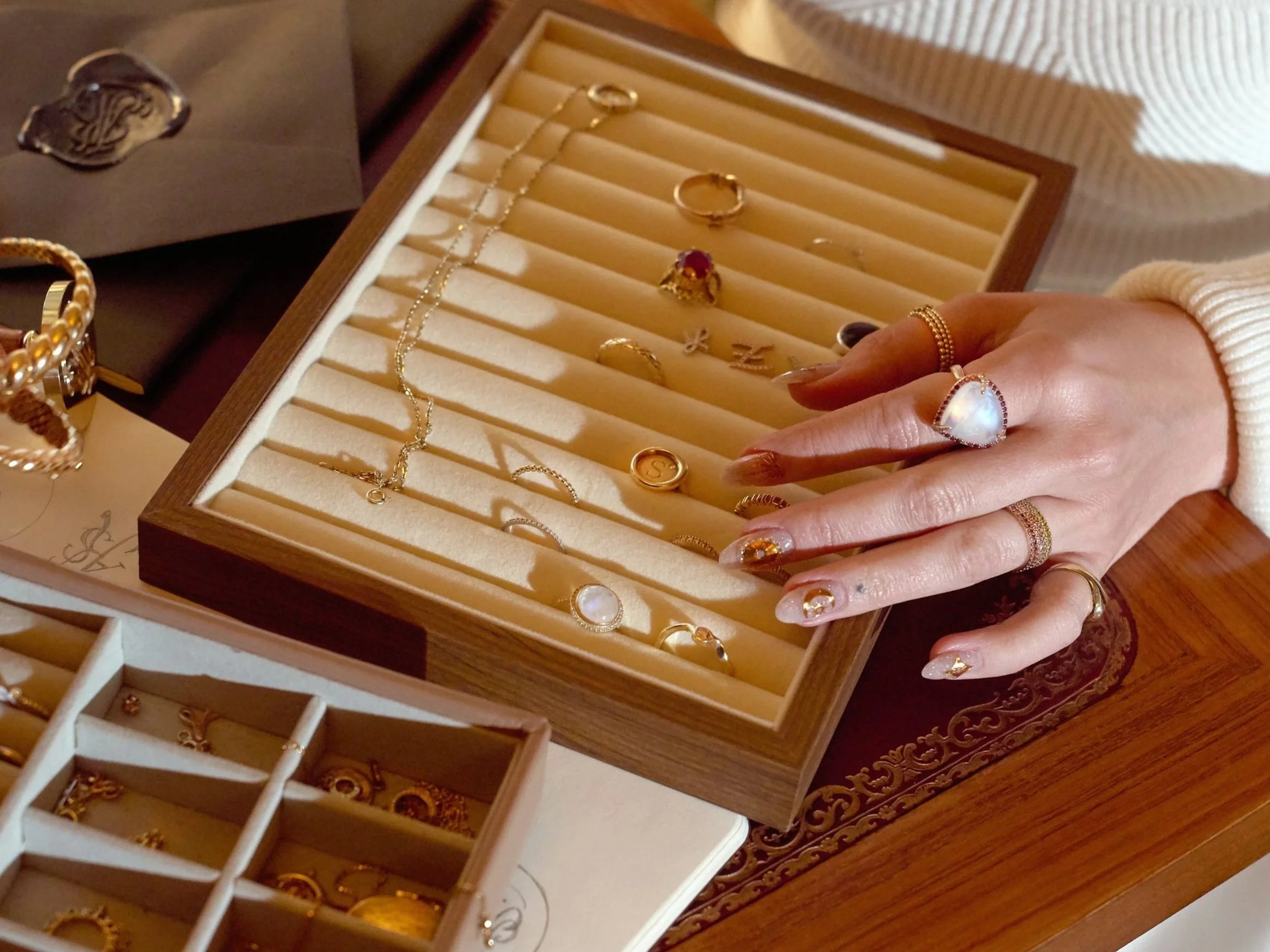
You chose a heraldic crest rather than a modern graphic logo. What led you to this traditional craft?
Once again, my obsession with family traditions. More specifically, it was inspired by the heraldic emblem of Alois Dallmayr — a German family business founded in 1700, which my father René Sion established in the Czech Republic about twenty-five years ago. Their logo features a heraldic symbol with Masonic elements, and that gave me a clear direction.
I approached a professional heraldist who created a crest according to all traditional rules. However, the result was almost too traditional and lacked a contemporary design edge. Together with my friend and graphic designer Pavla Šťastná, we refined it into its final form. Because the crest is very detailed, it can’t always be used, so I recently hand-drew a combination of the initials AKS, which I now use for seals and embossing.
When you design jewellery, where do you begin — with form, story, emotion, or material?
It varies. Sometimes it starts with a stone, sometimes with a historical reference. I don’t really follow a fixed rule unless it’s a custom commission with clearly defined parameters.
In every case, I always begin with hand sketches. Only then do I work with a 3D designer.
Prague has clearly influenced you — its Cubism, architecture, and history. Is there a place you create through most often?
There are places in Prague that I first visited as a child and immediately felt I wanted to return to and form a deeper connection with. That came true with the Old Town — specifically the former Jewish Quarter, which we casually call “the ghetto.” Between the ages of twenty and twenty-three, I guided English-speaking tourists there, and today my first master goldsmith has his workshop there — established in 1996 and now run by the next generation. Malá Strana is also deeply important to me. I performed amateur theatre there at seventeen and experienced a very formative artistic relationship. And then there’s the area around Prague Castle — but that’s a story for another time.
Your collaboration with the Thai brand IMPRINT began almost by chance, yet it changed your life. How do you remember your first encounter with Narid?
That entire first trip to Thailand felt almost destined. Bangkok completely captivated me with its energy and rhythm. I love Prague and live on its quieter outskirts surrounded by nature, but sometimes I feel frustrated by how slow things are here. In Bangkok, I felt the future. I thought to myself that I would love to live there — or at least return not as a tourist. And that wish came true. I remember IMPRINT and Narid from a local designers’ exhibition, Narid later contacted me on social media with a collaboration proposal.
What did Asia give you professionally — and personally?
Professionally, it gave me a global perspective. I don’t create only for the Czech Republic or Slovakia — I create “for everyone.” I ship jewellery all over the world, and sometimes I’m amazed that people trust me enough to order expensive pieces without ever having met me in person. On a human level, Asia opened my eyes. I witnessed extreme contrasts — luxury and poverty existing side by side in ways unimaginable in Europe. I saw it in Thailand, in China, and recently in Sri Lanka. These journeys always remind me how fortunate we are, and how little is sometimes needed to feel happy. When my children are older, I want to show them these places — so they can understand what real wealth truly is.
Designing a crown for Miss Supranational was a major challenge. What was that process like?
A crown isn’t something people normally wear, so there isn’t much to reference. Narid and I approached it more like an architectural project.
Besides jewellery, Narid also runs a real estate company, so she’s accustomed to working with architectural concepts. As inspiration, we chose historical Cubist buildings — both those that exist and those that exist only on paper.
Did motherhood change your relationship with jewellery?
Not so much jewellery itself, but rather my relationship with money. I prefer investing in solid gold jewellery whose value grows along with gold prices.
What deepened was something I already knew as a granddaughter inheriting jewellery from my grandmother — one day, I will be the one passing it on. Most of my personal pieces now contain texts related to my children. And by a beautiful coincidence, my initials are the same as the combined initials of both my children. This naturally reflects in the graphics and inscriptions on jewellery I create as my first prototypes for myself.
Which projects have touched you the most emotionally?
They are always pieces connected to deeply personal experiences. Rings created in memory of a suddenly deceased father or husband. Jewellery for clients I’ve known for years — from engagement rings, to anniversary gifts, to pieces marking the birth of each child. I’m currently working on a ring for a woman after a transplant. Or transforming wedding bands after a divorce into jewellery symbolising a new beginning. These are powerful everyday moments. They may not matter to the world, but for individuals, they are absolutely essential.
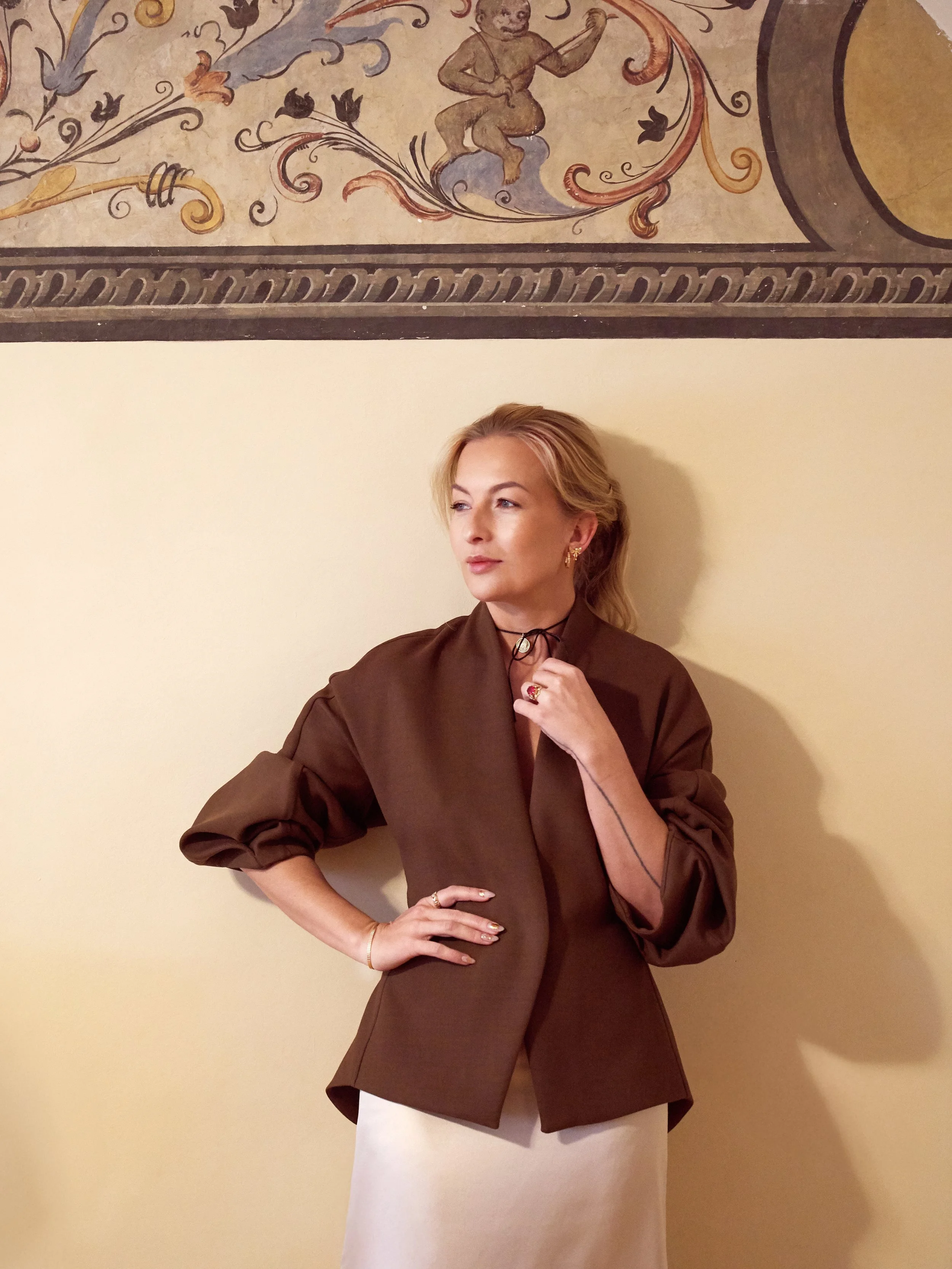
styling: Daniela Pešková
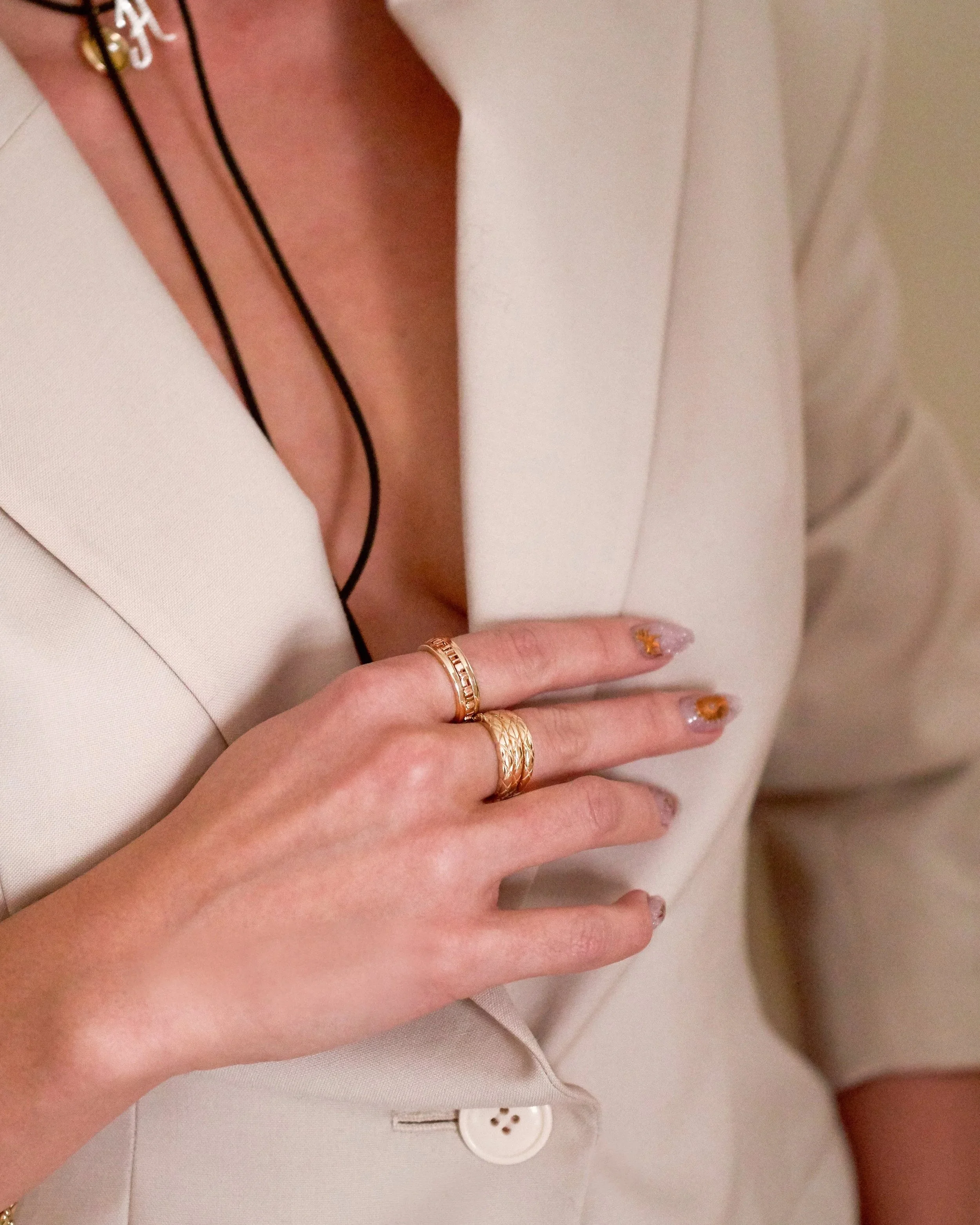
“I don’t create jewellery for a moment. I create it for memory, continuity, and generations.”
— Anna Kristyna Sion
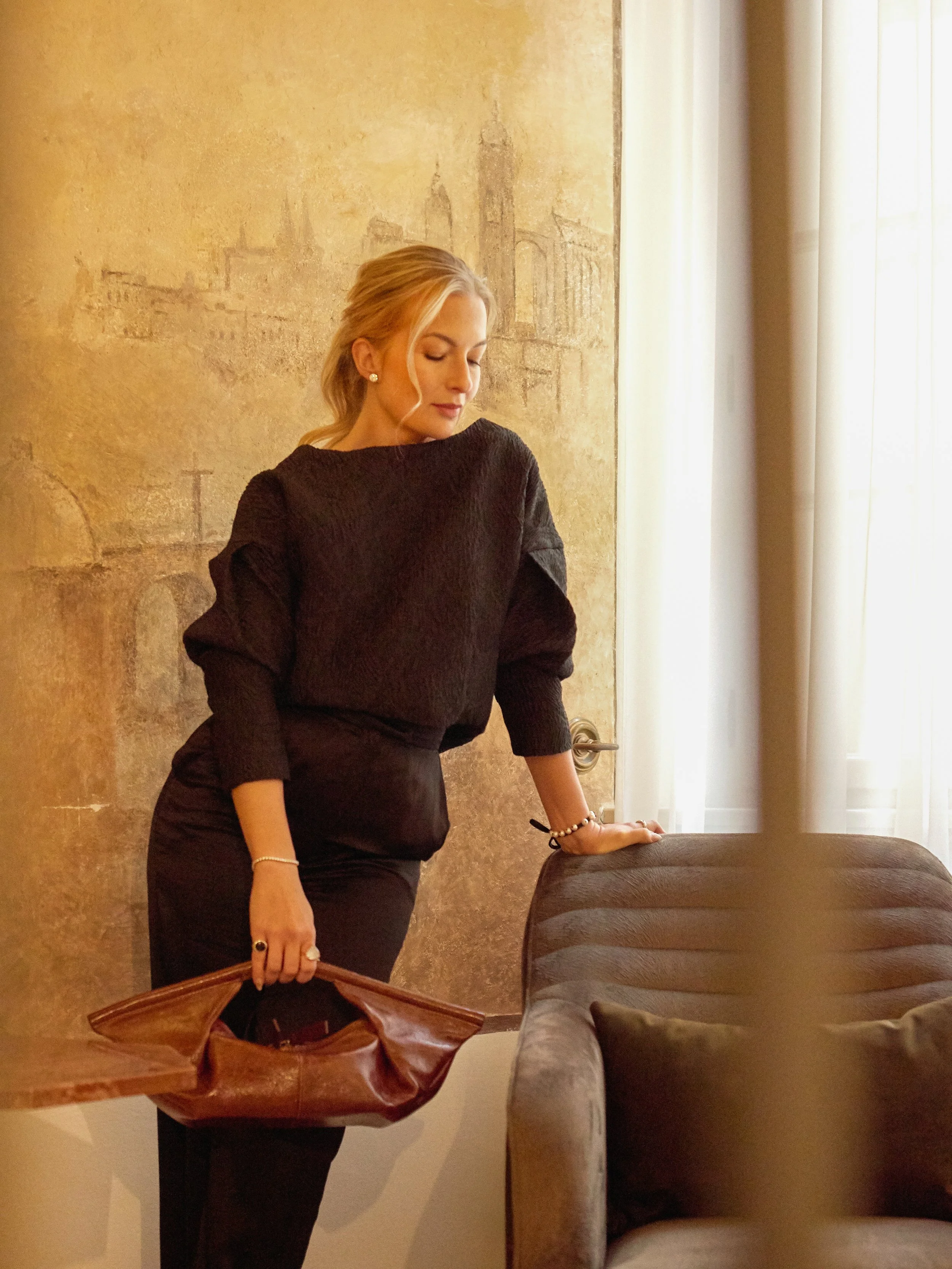
How do you approach trends and nostalgia?
I love combining antique, classic elements with a modern approach. Often we wouldn’t wear an antique piece in its original form, but once it’s subtly adapted to contemporary wear, the result can be extraordinary. I also love upcycling — especially in the work of Bára Jelínková and her brand Jarmilé, with whom I collaborate. She masters jewellery upcycling beautifully. Minimalism, however, doesn’t speak to me at all.
What fascinates you most about the SIGNET Collection and family insignias?
Family stories and histories. I might be annoying about it, but whenever I meet someone, I want to know where they come from, what their ancestors did, where they lived. I can’t exist without knowing that. No history is more or less important than another — every story matters. It’s about capturing it beautifully and finding its positive layers. Without ancestors, we are like trees without roots. Of course, sometimes we are uprooted and have to rebuild everything from scratch — but that doesn’t mean we came from nothing.
What does “a piece of jewellery for life” mean to you?
It’s jewellery we approach with responsibility. It must carry something personal. That’s why I love text-based jewellery, such as pieces we create with IMPRINT. The inscription is uniquely yours — making the piece essentially worthless to anyone else. Unless, of course, someone sells it for gold and stones. You wouldn’t wear a stranger’s family names or intimate message.
Where do you want to take your work with gemstones next?
More interesting stones. Creating more jewellery purely for myself, without worrying whether it will sell — that’s probably the ultimate dream of every artist.
I want to travel more in search of stones. Sri Lanka was the beginning, where I built contacts directly at the mines of my beloved moonstones. India is inevitable, and perhaps Africa as well. These will be purely “working” trips — definitely not holidays. I’m increasingly fascinated by stones themselves, even beyond jewellery-making. As a child, I collected semi-precious stones — so perhaps I’m simply returning to that place.
Styling: Vendula Šulanová, Jana Mikešová
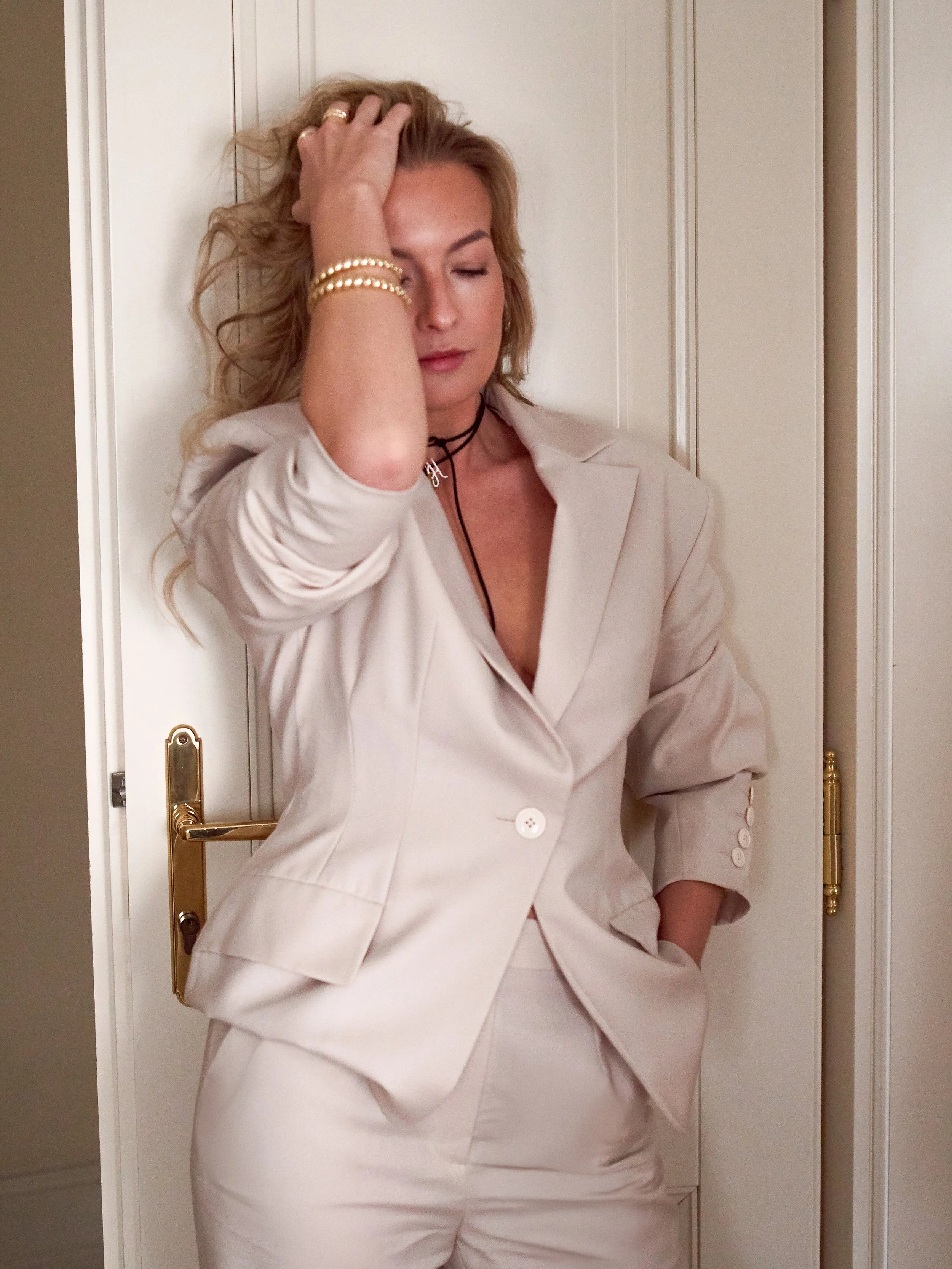
Anna Kristyna Sion
Anna Kristyna Sion is a Czech jewellery designer and artist whose work is rooted in craftsmanship, family memory, and historical continuity. Originally trained in fashion design in Prague, she soon realised that jewellery — not clothing — was her true language: an object that does not follow trends, but endures in time. Her practice combines traditional goldsmith techniques, heraldry, and personal symbolism, often working with gemstones valued for their natural imperfections and individuality.
Her brand carries her own name as a conscious statement of authorship and responsibility. Alongside her independent work, she has collaborated with the Asian jewellery brand IMPRINT, including the design of a crown for the Miss Supranational competition. Through her jewellery, Anna explores themes of inheritance, intimacy, and personal milestones — from engagements and motherhood to loss, transformation, and new beginnings. For Anna Kristyna Sion, jewellery is not decoration, but memory made tangible.
WEBSITE: Anna Kristyna Sion
Credits: Photography: Lucie Desmond · Production and text: Abigail Nováková · Styling: Eliška Šefčíková · Make-up: Kristýna Němček
Special thanks to Hotel Nerudova 211 for providing the location. Thanks to designers ROJI and Daniela Pešková, Vendula Šulanová, Jana Mikešová.