From Outer Beauty to Inner Connection
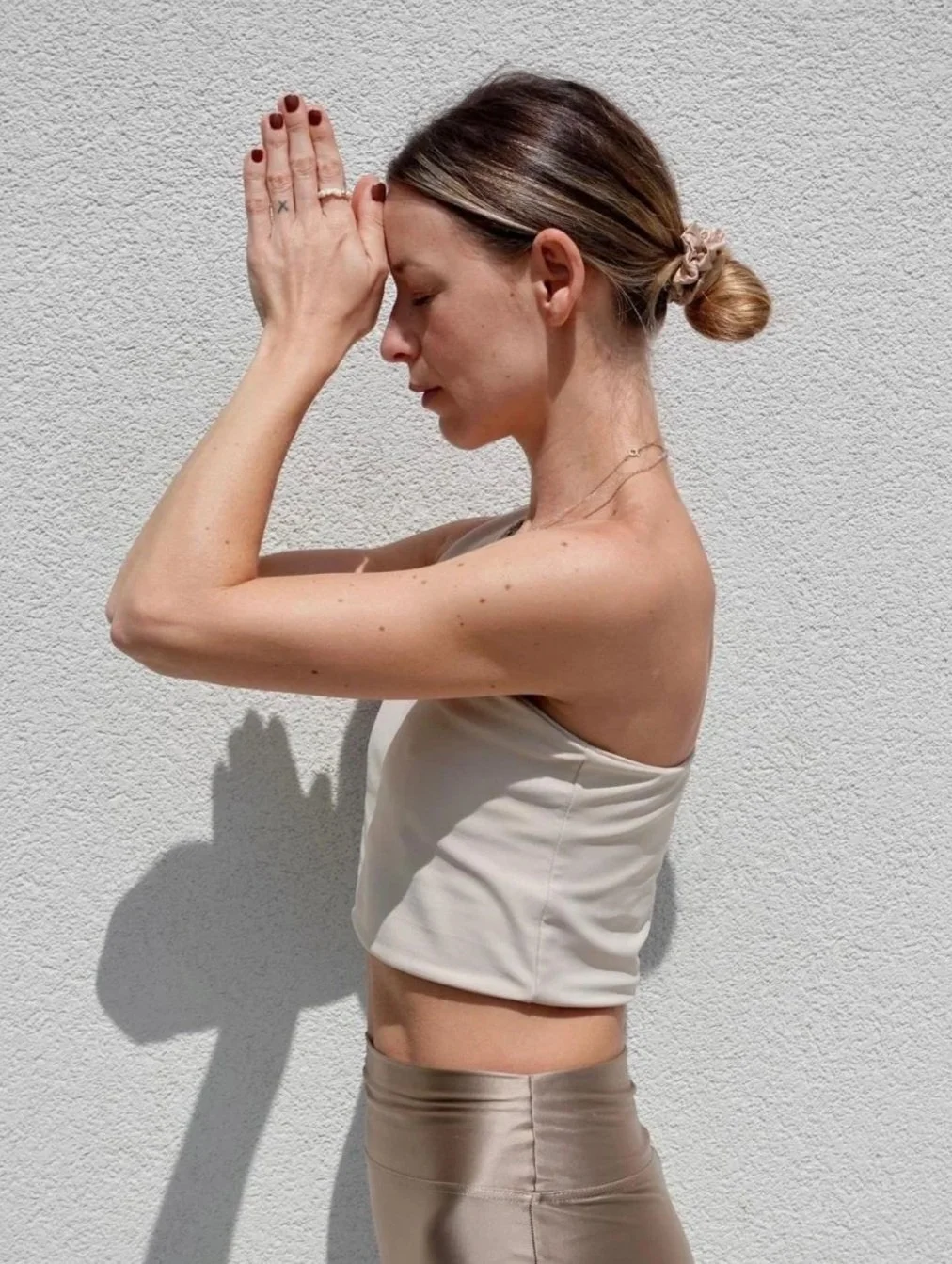
What if the most meaningful kind of beauty is not something we create, but something we uncover? For Monika Lörinczová, founder of Back to You, beauty has always been about more than appearances. From the creative world of Paris and luxury fashion houses such as Chanel and Louis Vuitton to studying Colour Psychology at the London College of Fashion, her journey has always been guided by aesthetics, intuition and a fascination with human identity.
Today, at her Back to You studio in Prague's Dejvice neighbourhood, she brings these worlds together through conscious touch, craniosacral care, sound, aromatherapy and intuitive work with colours and creative expression. She also shares her approach through Flow to Yin yoga classes at Souladronka. What I find particularly compelling is how naturally her story connects outer beauty with inner wellbeing — not as two separate worlds, but as different expressions of who we truly are. In our conversation, we explore the art of slowing down, learning to listen to our bodies, rediscovering joy and why even self-care can sometimes become another form of pressure. Because perhaps the greatest luxury today is simply allowing ourselves to be.
You worked with brands such as Chanel and Louis Vuitton, immersed in branding, marketing, trends and understanding customers. What did that world teach you that still influences your work today?
At first, I had a certain distance from the world of luxury brands. But then I thought to myself: where else could my eye for detail be truly appreciated? And in the end, that environment pleasantly surprised me and taught me an incredible amount. I came to understand that it isn't just about the product or the sale, but above all about the experience about what a visual, a space, a material, a story or an atmosphere can awaken in someone. It taught me to see the bigger picture without overlooking the smallest details. Working with people was another invaluable lesson — observing their needs, the way they express themselves, but also what they don't say. Body language often reveals something that we are not yet able, or willing, to put into words. And it is precisely this sensitivity towards people and detail that continues to guide me today.
You once helped brands express their identity outwardly — understanding their story, their atmosphere and the people they wanted to reach. Today, you seem to bring that same sensitivity to individuals and their inner worlds. Do you see a connection between the two?
Yes, particularly when it comes to identity. In the past, I was interested in the identity of a brand — its story, where it came from, what had shaped it and where it wanted to go. Today, I approach people with a similar curiosity. From childhood, we are shaped by our environment, our parents, authority figures, experiences and beliefs that we gradually adopt as our own. And sometimes, only in adulthood do we realise that we no longer really know which parts are truly ours and which we have absorbed along the way. Just as a brand sometimes needs to return to its own story to find a new direction, we too may need to look back and inward — not to remain in the past, but to better understand who we are and where we want to go next.
Beauty has never really disappeared from your life; you've simply moved from its external expression towards something deeper. Has that changed what beauty means to you personally?
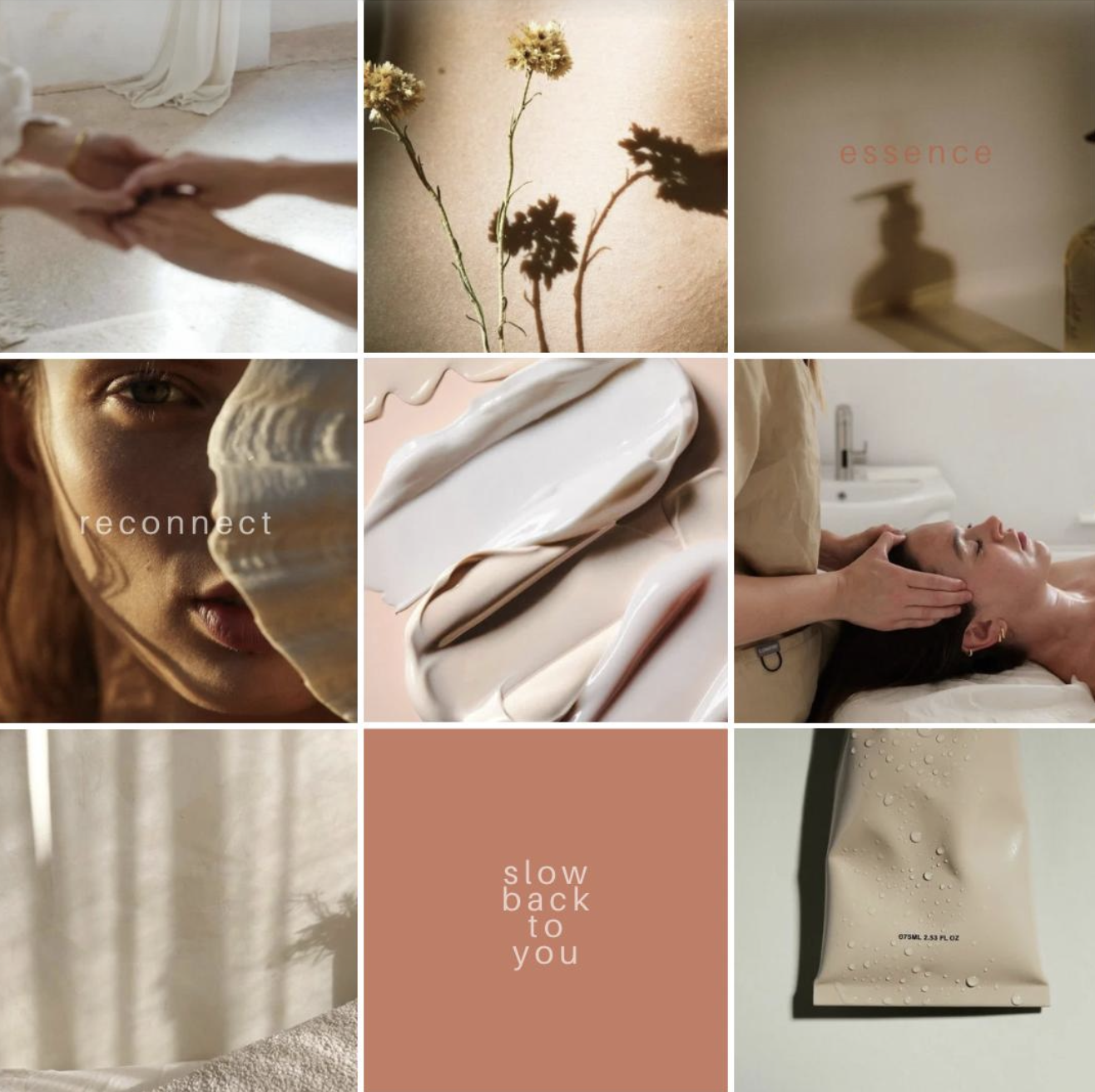
I certainly see beauty in a much broader sense today. For me, it is no longer simply a question of aesthetics or something that is pleasing to the eye. I experience it very strongly in my work with people. Through conscious touch, we come closer to the parts of ourselves that we usually protect — our vulnerability and our authenticity. Sometimes I feel as though I am watching a rosebud slowly begin to open within a very short space of time. And it is precisely in that moment, when someone briefly lets go of their protective layers and allows themselves simply to be, that I perceive their beauty most deeply. Perhaps what has changed is not how important beauty is to me, but where I am now able to see it and how deeply I can feel it.
When the Body Speaks Before the Mind
Back to You is guided by the idea, “When the body says something the mind hasn't yet heard.” When did you first begin to discover how important it is to truly listen to your body?
For me, it began quite naturally through food and the question of how I nourish my body. A major turning point came during my time in Paris, when I started experiencing skin problems. At first, I was looking for ways to care for my body from the outside, but gradually I became more interested in why it was happening and what my physical condition might be reflecting. At that time, I was living in a constant state of performance, stress and speed. My breathing was very shallow, and I was doing so many things on autopilot. On the outside, everything was working, but I wasn't really feeling connected to myself. My body was the first indication that I needed to start paying attention to what was happening within.
Through yoga, breathwork and other approaches, I gradually developed a deeper interest in the nervous system and psychosomatics. And this is where the essence of Back to You begins for me. Returning to yourself doesn't mean searching for something new, but relearning how to sense what is already within us. We don't have to simply manage and control our bodies. We can also learn to listen to them.
We spend so much of our lives in our heads — analysing, planning, searching for explanations and constantly absorbing information. What can change when we stop looking for answers outside ourselves and turn our attention inward?
I would say that a small miracle can happen. Suddenly, we can become truly aware of the present moment. When we become quiet and slow down, we may begin to hear what has perhaps been calling for our attention from within for a long time. And that is one of the essential ideas behind Back to You. Not simply reading or hearing about what calm, safety or trust mean, but actually experiencing them. Because an experience like that can leave an imprint within us, something we can gradually learn to return to in everyday life. Perhaps sometimes all we really need is to quiet the mind so we can hear our inner voice again.
Beyond the Treatment: The Power of Experience
Your work brings together craniosacral care, conscious touch, sound, meditation, breathwork, aromatherapy, yoga, colour and intuitive creativity. How do you recognise what each person needs in a particular moment?
The most important thing for me is to first create a space where someone can settle, feel accepted and have my full attention. Only then does the care unfold according to what they arrive with. Some people need to bring their nervous system into greater balance and find their way towards better sleep. Others need to reconnect with their bodies through movement or conscious touch. Someone else may be searching for a new direction in life. In those moments, we often work with intuitive creativity — another way of expressing what may not yet be possible to put into words.
I take a similar approach with children. They can explore sounds for themselves, smell different oils and express what feels pleasant to them. This way, they are not simply passive recipients of care, but are also learning to recognise their own needs. For me, methods are not a fixed procedure, but tools that I choose from depending on what a particular person needs in that moment.
The key is my own intuitive attunement — the ability to tune into the person in front of me, notice subtle signals from their system and respond to them. I trust the body's natural wisdom and its ability to show us where attention needs to be directed.
You often emphasise that your work is not simply about individual techniques, but about the experience itself. What does creating a truly meaningful experience mean to you?
For me, the experience begins even before the care itself. It is in the way you welcome someone, the atmosphere of the space, the temperature, the softness of the lighting and materials, the scent or the sound. Every detail matters.
I actually spent a long time considering whether to call Back to You Through All the Senses. Because it is precisely through our senses that we experience life.
My wish is that people leave with more than just the memory of a pleasant treatment. I want them to take away an experience of themselves — perhaps even the opportunity to briefly “taste” what safety, trust and inner calm feel like.
What does a session with you actually look like? Do people usually arrive with a specific concern, or does something important sometimes emerge only during the experience itself?
Some people come with a specific issue, while others simply arrive with the feeling: “I need to switch off. I'll leave it up to you.” What really matters may only begin to reveal itself during the care itself, which takes place on a treatment table, fully clothed and under a blanket. The blanket can help the client feel a greater sense of safety, allowing them to open up to trust. I allow myself to be guided by what I sense. I pay attention to breathing, tension and subtle reactions in the body, and choose the next touch, sound, frequency or scent accordingly. And sometimes there is no need to add anything at all — just remain present and allow space for whatever is unfolding. Every session is therefore different. For me, it is a kind of flow, in which I attune myself to the client and allow the care to emerge naturally in the moment.
Living, Not Just Getting Through Life
One of the central ideas behind Back to You is learning to truly experience life again, rather than simply getting through it. How can we recognise when we've started losing touch with ourselves?
I see two situations. In the first, the things a person's life is built upon begin to gradually fall apart — work, relationships, home or a sense of direction. It is as though some of the pillars of their life need to be readjusted. And then there is a less obvious situation: everything appears to be functioning on the outside, but the person can no longer truly experience joy, desire or motivation. Perhaps it is precisely when we are managing our lives but no longer truly experiencing them that we begin to realise we have drifted away from ourselves.
We live in a time when even slowing down and taking care of ourselves can become another task — meditating, exercising, breathing correctly, creating the perfect morning routine. Can self-care paradoxically become another form of performance?
Absolutely. As a mother of a young daughter, I've been through this myself several times. I would finally have a moment to myself, and immediately the thoughts would appear: now I should exercise, meditate, do something for myself. When sometimes all I really wanted was simply to be and do absolutely nothing. A simple sentence helped me enormously once: No one is indispensable. Realising that the world would continue functioning for a little while without me allowed me to release some of that pressure.
Today, I tend to ask myself: Am I doing something for myself because I genuinely feel I need or want it? Or because I feel I should? Sometimes the greatest act of self-care is simply allowing ourselves to do nothing at all.
The Luxury of Time Without Limits
You're currently developing a new concept of care that moves beyond the traditional 60- or 90-minute appointment. Someone might spend several hours with you, perhaps even an entire day. What inspired you to remove the time limit, and what might such an experience look like?
I arrived at this idea gradually through my clients. I began noticing that we were naturally spending more and more time together, and that they were often looking for support between sessions too — wanting to share something, hear my perspective or receive my intuitive insight into a situation they were going through. Our connection sometimes naturally extends beyond the care itself. And I began asking myself: why does it always have to be limited to exactly 60 or 90 minutes? That is how the idea of care without a time limit began to emerge — without rushing, in complete flow. It isn't about filling several hours with as many techniques as possible, but about creating more space for intuition. We might begin with meditation or movement, continue with the Return to Yourself care, and leave room for intuitive creativity, cards, colours, scents or even the creation of a personal aura spray. One element can naturally open the way to another. For me, time without limits means having the possibility to move through the different layers, allowing someone to truly settle into themselves and then seeing where the experience takes us.
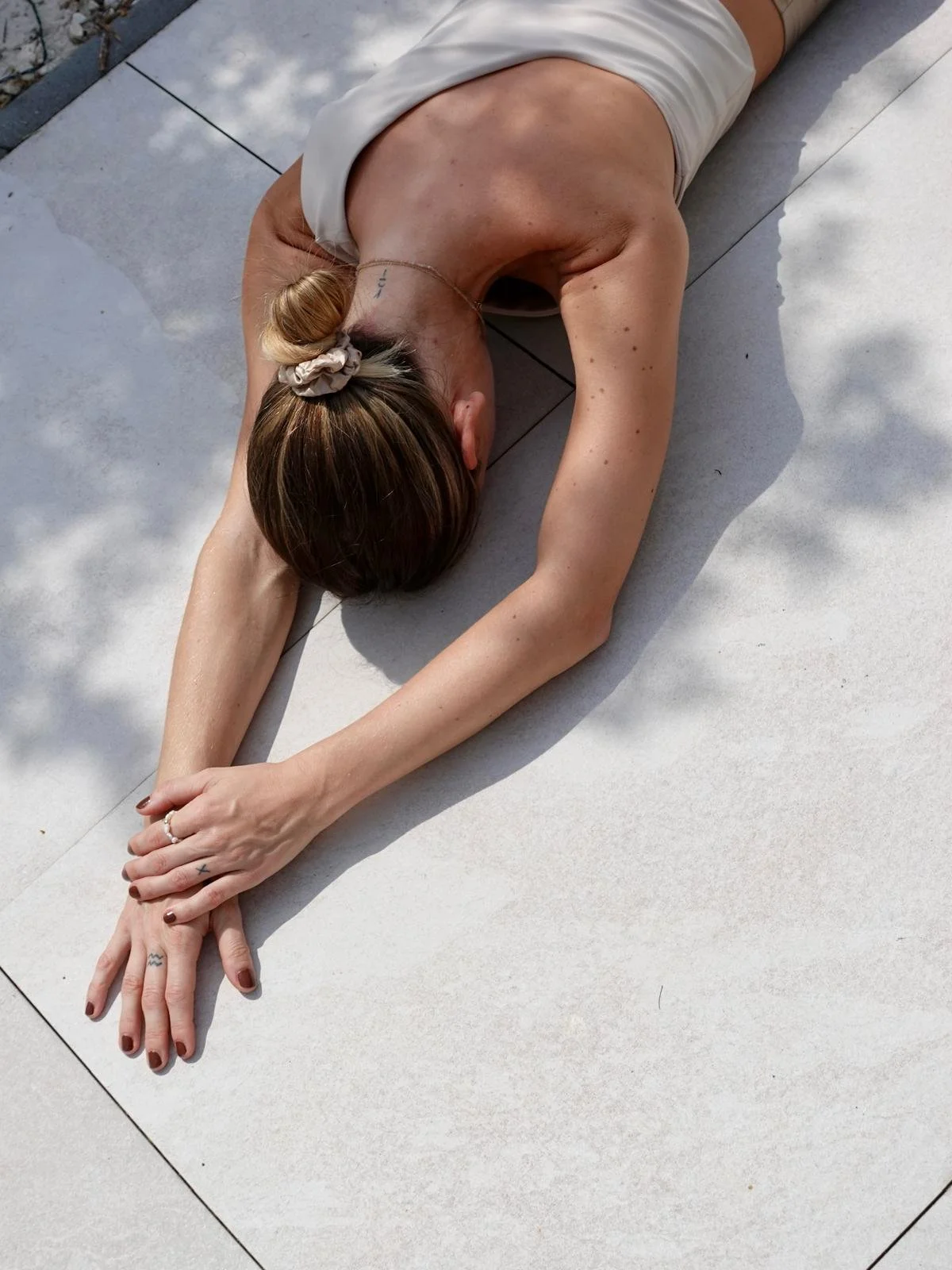
When Inner Beauty Finds Its Outer Expression
In a way, this also brings you back to your original world — colours, aesthetics, styling and make-up. Do you see the outward expression of beauty as a natural continuation of the inner work, when what someone discovers within begins to reflect in how they look and feel?
People often long for a quick external change that will express who they want to become. But a new style, colour or appearance alone may not be enough if we are not yet living that change on the inside. Visually, we can create a certain image, but our body language or the energy we radiate may tell a different story. I never really left the world of colours, beauty and aesthetics. But I needed to go deeper within myself so that I could return to them today from a different place. It is no longer simply about what suits someone, but about allowing their outward expression to be in harmony with who they truly feel they are inside.
Yoga is also an important part of your work, including your own classes at Souladronka. What role does yoga play in your personal life, and how do its principles shape the philosophy of Back to You? Is it more about movement, or another way of reconnecting with the body?
At first, yoga was primarily a form of movement and a way for me to calm down. I gradually moved from the intensity of Bikram through dynamic Vinyasa to a slower Yin practice. Today, I draw on these experiences in my own Flow to Yin. Vinyasa gives me creativity, freedom and rhythm, while Yin turns the attention further inward — towards the body, the breath and whatever is happening within us in that moment.
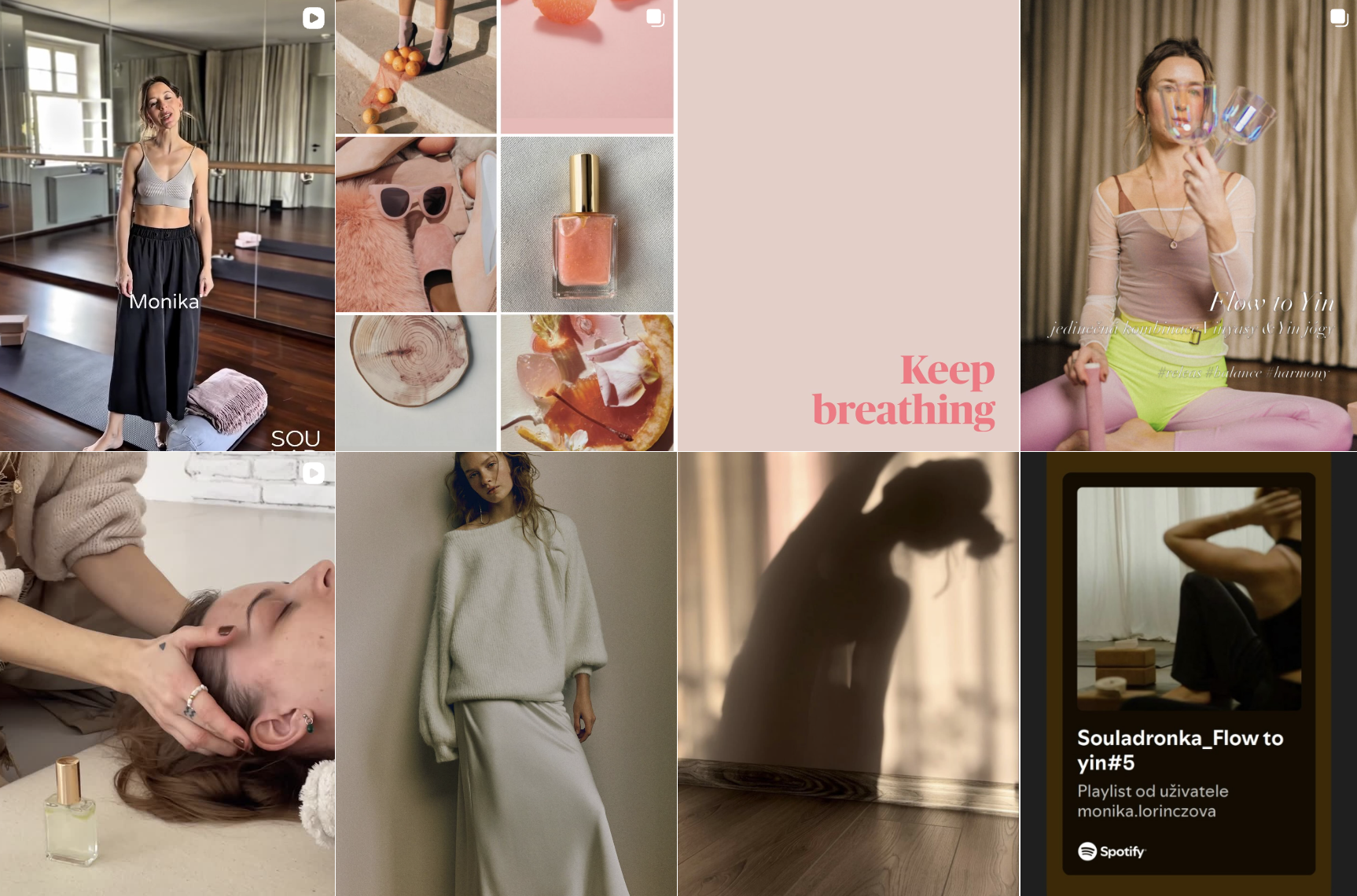
I'm grateful that Souladronka gives me the opportunity to share this approach and offer women not only movement, but above all an experience. That is why conscious touch, sound and scent also become part of my classes, and during longer workshops, even taste. Yoga becomes something we don't simply practise, but truly experience through all our senses.
If you were to remove all the names of therapies, techniques and methods from Back to You, what would you most want someone to take away from their time with you?
To allow myself to be who I truly am — in my full vulnerability and my full strength.
