Viktorie Mrkousová: The Shape of an Idea
“The idea that anything you imagine can actually be brought to life is what fascinates me.”
Perhaps this sentence best captures Viktorie Mrkousová, a young designer whose creative world exists somewhere between architecture, fashion and traditional craftsmanship. Currently studying architecture at UMPRUM in Prague, Viktorie discovered footwear design almost unexpectedly – at a moment when she felt the need to step away from the computer and return to something tangible, tactile and made by hand. A placement at the Footwear Design Studio at Tomas Bata University in Zlín opened the door to an entirely new discipline, one that quickly became a fascination of its own.
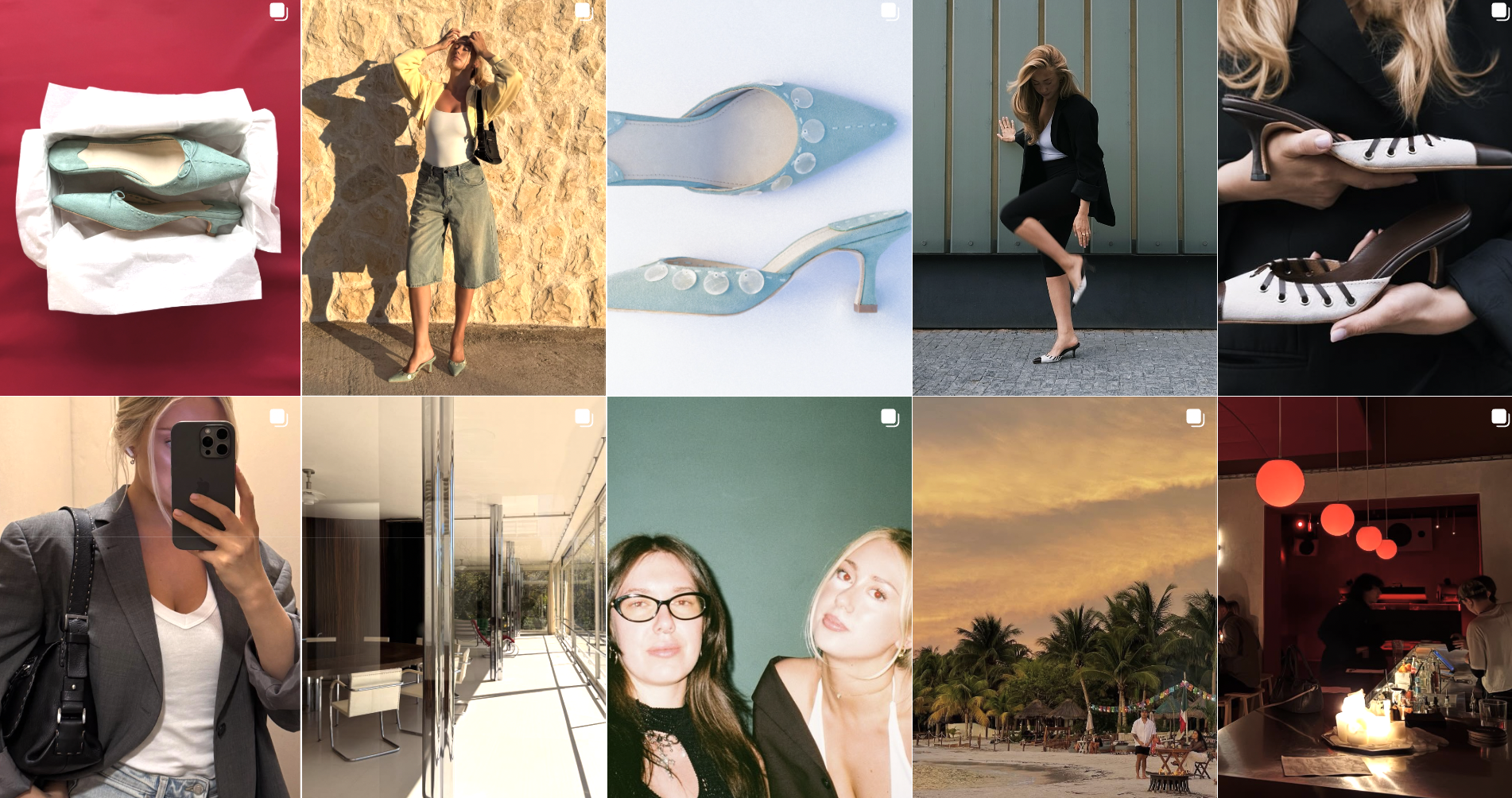
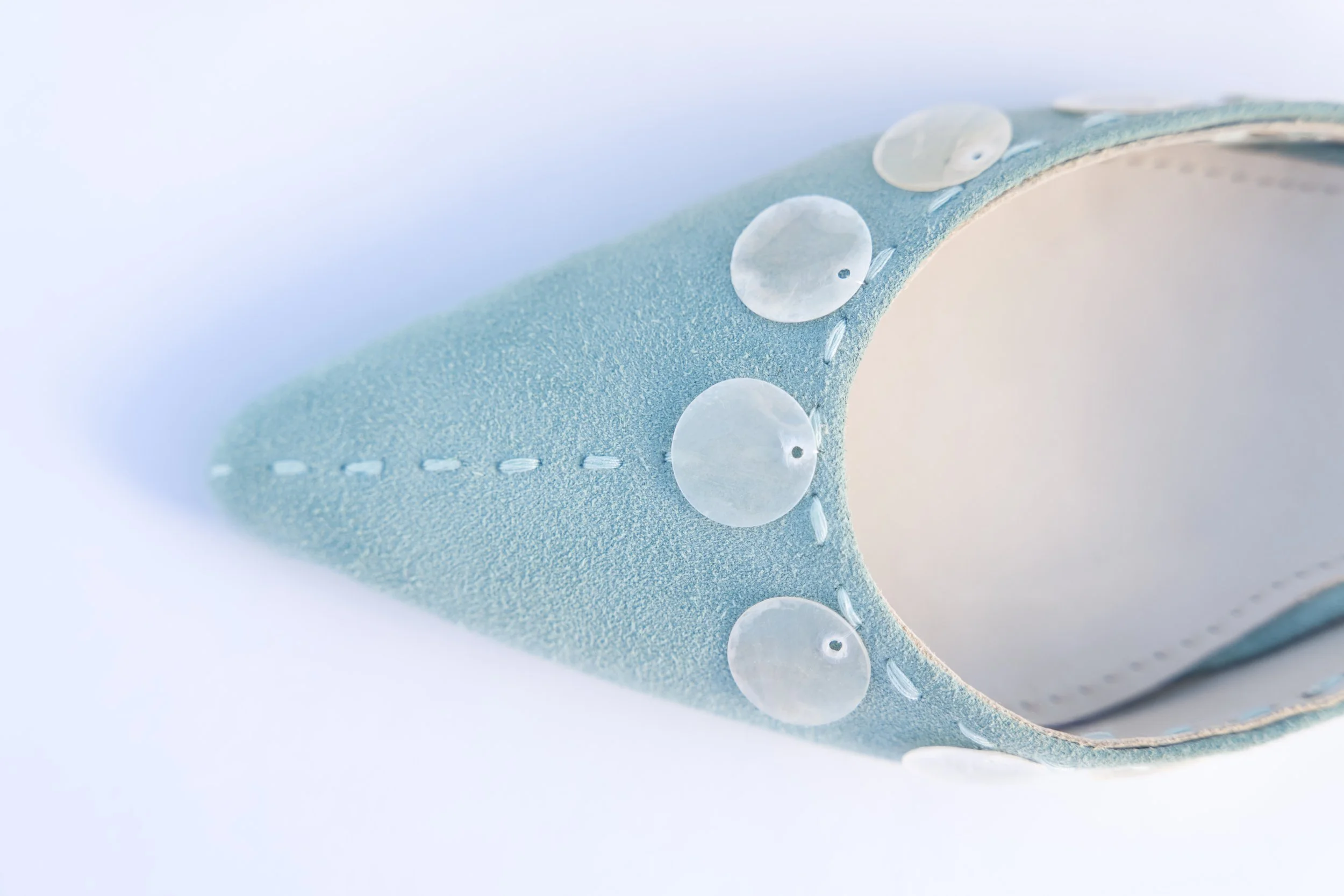
What I find particularly compelling about Viktorie’s work is her sensitivity to detail and a certain effortless nostalgia. Her references move freely between vintage issues of Architectural Digest, films from the 1990s, interiors, materials and people she notices on the street. Within a single pair of shoes, architectural thinking about form and proportion can meet delicate suede, mother-of-pearl details or subtle references to traditional Bata footwear.
Viktorie is quick to point out that she is only at the beginning and does not want to define her path too precisely just yet. Perhaps that is exactly what makes her work feel so fresh – it is driven by curiosity, the pleasure of making and the possibility of transforming an idea on paper into a tangible object.
We spoke with Viktorie Mrkousová about finding her way from architecture to footwear, the beauty of craftsmanship, her fascination with Manolo Blahnik and 1990s aesthetics, growing up surrounded by handmade objects – and why Italy or Spain might be the next chapter in her creative journey.
1. Do you remember the moment when you first thought that shoes were something you wanted to pursue? What fascinates you most about designing and making them?
I’m currently entering the penultimate year of my architecture studies at UMPRUM, and as part of our studio work, we are allowed to undertake internships at other schools, even if their focus is completely different from our own. Over the past few semesters, I had started to feel very tired of working at a computer and wanted to take a break from it. For me, working with my hands is the best kind of escape.
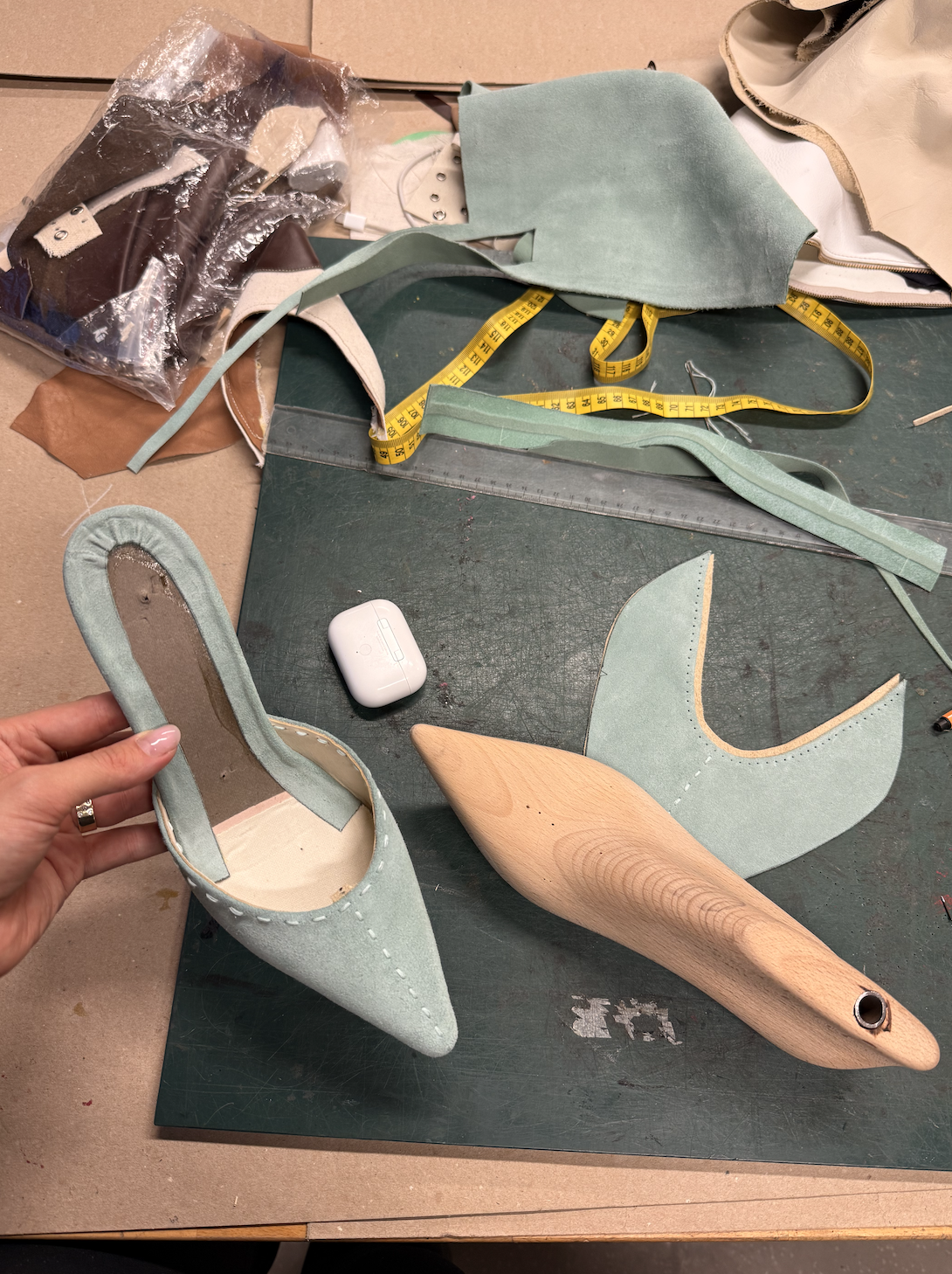
I’ve always loved shoes, but it had never occurred to me that I could actually design or make them myself. So I arranged an internship at the Footwear Design Studio at Tomas Bata University in Zlín. What fascinates me most is the endless number of possibilities – the things you can imagine and then actually bring to life.
2. Your work feels very contemporary, yet traditional craftsmanship is strongly present in it. Is the design itself more important to you, or the process that leads to the finished pair?
I’m still learning everything and I’m very much at the beginning, but I really enjoy the entire process – from the initial sketches and coming up with different variations all the way through to the final result. I love the fact that whatever you imagine can actually be made tangible.
“The fact that anything you imagine can be brought to life is what fascinates me.”
3. How does a new pair of shoes actually come to life from the very beginning? Does it start with a particular shape, material, colour or detail, or rather with a mood or story you want to capture?
I would say that, at this point, it varies. I’m often inspired by interiors, fabrics, leather and colour combinations. But it can also be a well-dressed person on the street, the atmosphere in a café, music, a foreign city – basically anything.
I really enjoy looking at Manolo Blahnik’s early work and, from contemporary fashion, for example, the work of Corrado De Biase for YSL. After the initial idea, I usually sketch several different versions, choose the materials and colours, and then start working on the first prototype. The shape of the shoe itself is also very important to me.
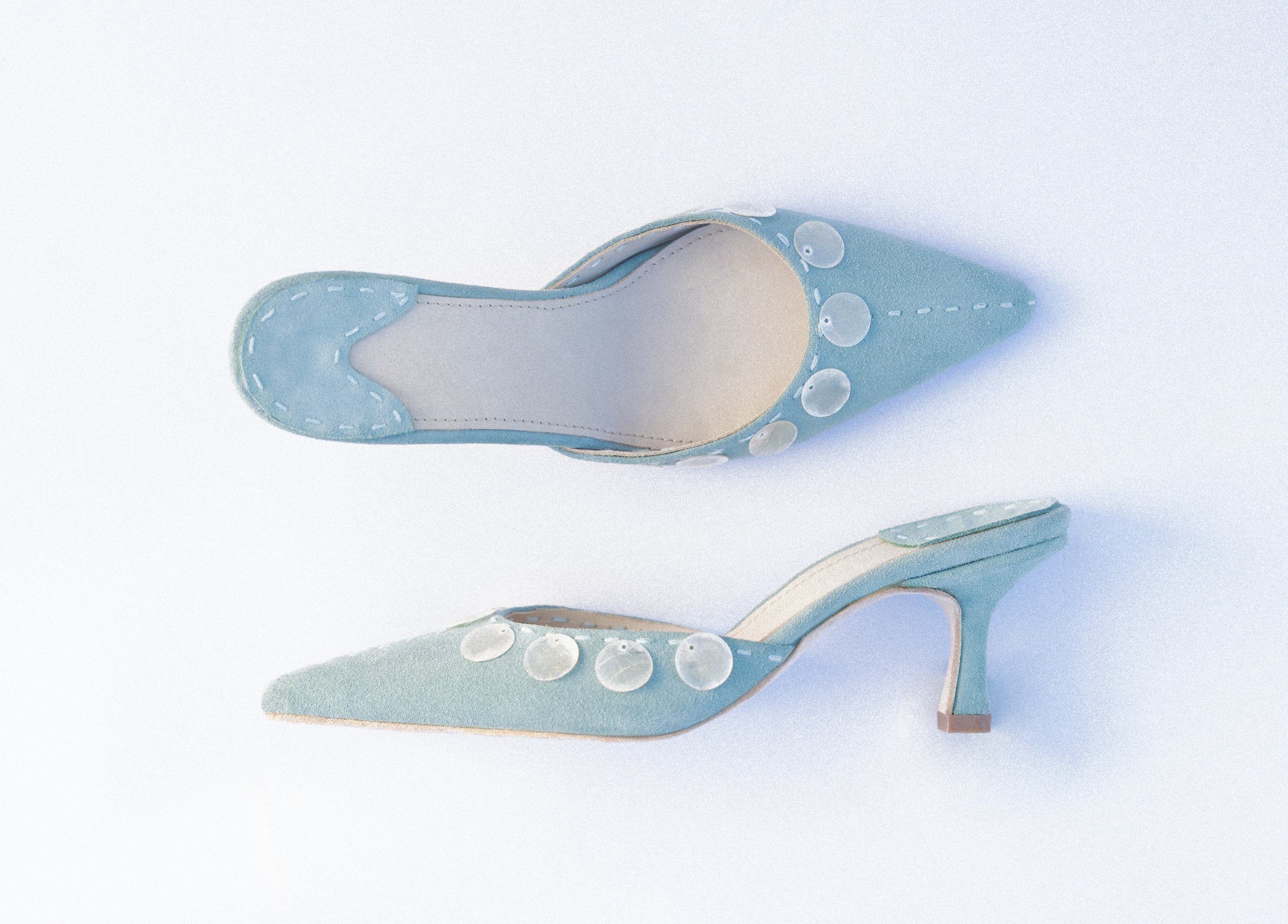
4. For one of your designs, you drew inspiration from traditional Bata shoes dating back to 1897, while elsewhere you work with mother-of-pearl or suede inspired by the colours of the sea. Where do you most often look for inspiration? Is it fashion history, people around you, travel, art, or ordinary everyday moments?
I made my first pair inspired by Bata as part of a semester project at Tomas Bata University, where the assignment was connected to the anniversary of Tomáš Baťa. My main inspiration came from the materials that were traditionally used to make Bata shoes at the time, while I developed the shape and overall execution of the footwear myself.
When it comes to my work outside school, I’m quite nostalgic. I draw a lot of inspiration from films from the 1990s – I love the fashion of that period, the materials and the silhouettes. I also really enjoy going through old issues of Architectural Digest from the 1980s and 1990s that my grandfather collected, and they have become a big part of my inspiration as well.
“I really enjoy looking at Manolo Blahnik’s early work and, from contemporary fashion, the work of Corrado De Biase for YSL.”
5. How much does the original design change during the actual process of making a shoe by hand? Does the material or craftsmanship ever take you in a completely different direction from what you originally intended?
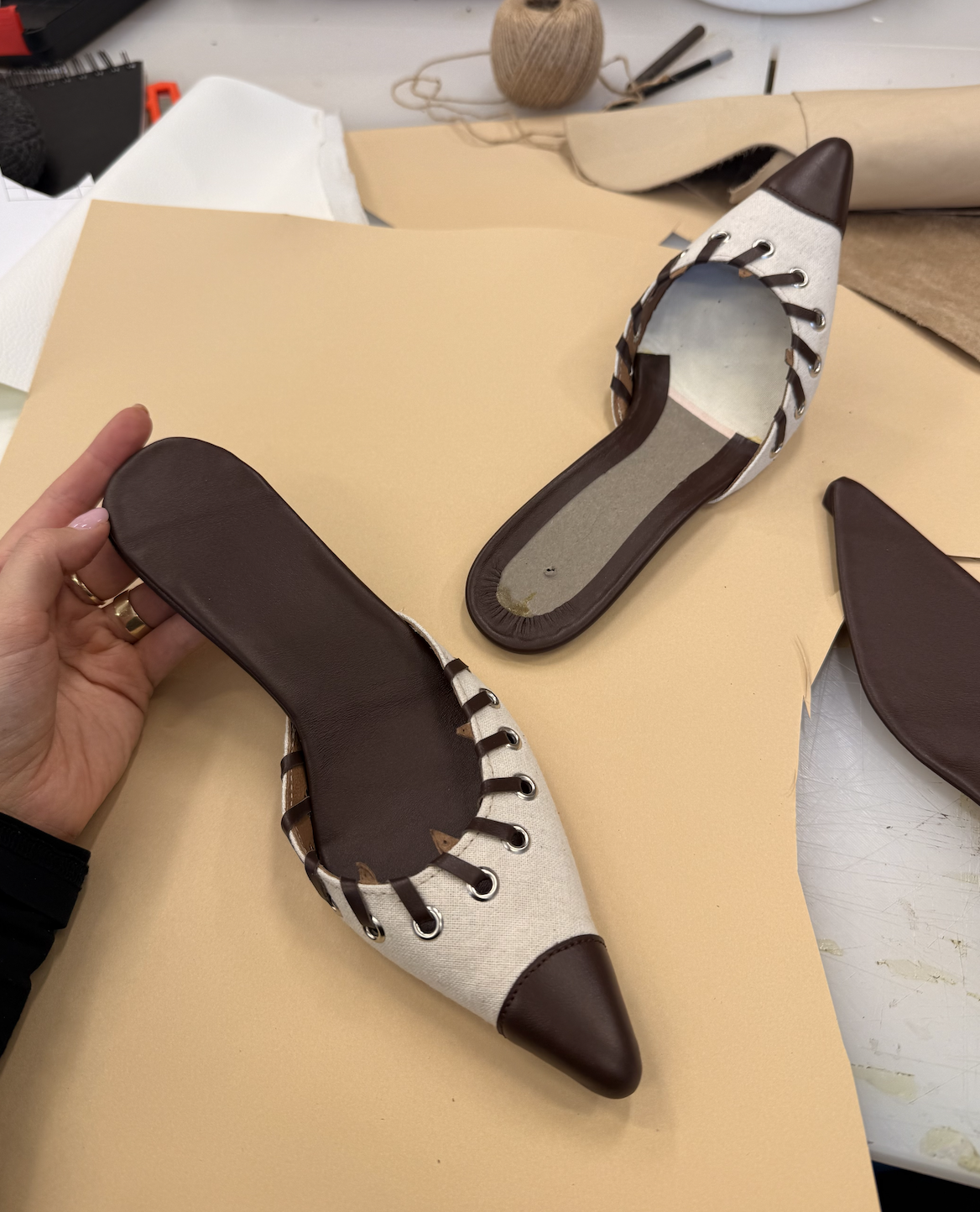
So far, I’ve always tried to make sure that the final result looks as close as possible to my original sketches. Of course, individual materials can sometimes behave differently from what you expected. That’s why we often make several prototypes in the studio before we begin working on the final product.
6. You study at UMPRUM and, at the same time, you are already developing a fairly recognisable visual language of your own. In what ways has school influenced you the most, and what have you had to discover for yourself?
Studying architecture – and architecture itself – is definitely a major part of what influences me. It has taught me to be more aware of my surroundings and to notice details, individual materials and proportions. What I then had to discover for myself was how I wanted to work with all of that.
7. Your shoes are very feminine without feeling overly obvious. What kind of woman do you enjoy designing for? Do you ever imagine a particular person wearing a specific pair?
Usually, I don’t have one particular person in mind. I think more about the occasion the shoes might be suitable for – whether it’s a party or a work meeting, what the atmosphere would be like, what clothes might be worn with them, and so on.
8. What does good design mean to you? Does it need to be beautiful, functional and timeless above all, or should it have the ability to evoke something in us?
It’s very subjective, but for me personally, emotion is what works most strongly. I would love my work to have an effect on people and perhaps even inspire them to create or pursue something else.
9. Is there a particular detail by which you would one day like people to recognise your shoes, even if your name wasn’t on them?
Ideally, of course, I would love them to be recognisable without needing any kind of “signature” detail at all.
10. We live in an era of extremely fast fashion, while your work is rooted in time and craftsmanship. Is this sense of slowness and return to traditional craft a conscious part of what you want your work to communicate?
Definitely. I experience and understand craftsmanship mainly through my mother, who is a jewellery designer, and my younger brother, who is following in her footsteps in jewellery making. I see how much work and time goes into everything they create.
11. If you could choose any woman – contemporary or historical – and design just one pair of shoes for her, who would it be and what would they look like?
Sarah Jessica Parker – lots of colours and textures, different types of leather, buckles, straps and a very high heel.
12. When you’re not creating, what helps you switch off and enter a completely different world? Do you have a small ritual, place or activity you always return to?
Definitely spending time with my family and friends, ideally somewhere in nature.
13. What does your personal style look like outside the studio? Are you someone who thinks carefully about fashion, or do you dress more intuitively?
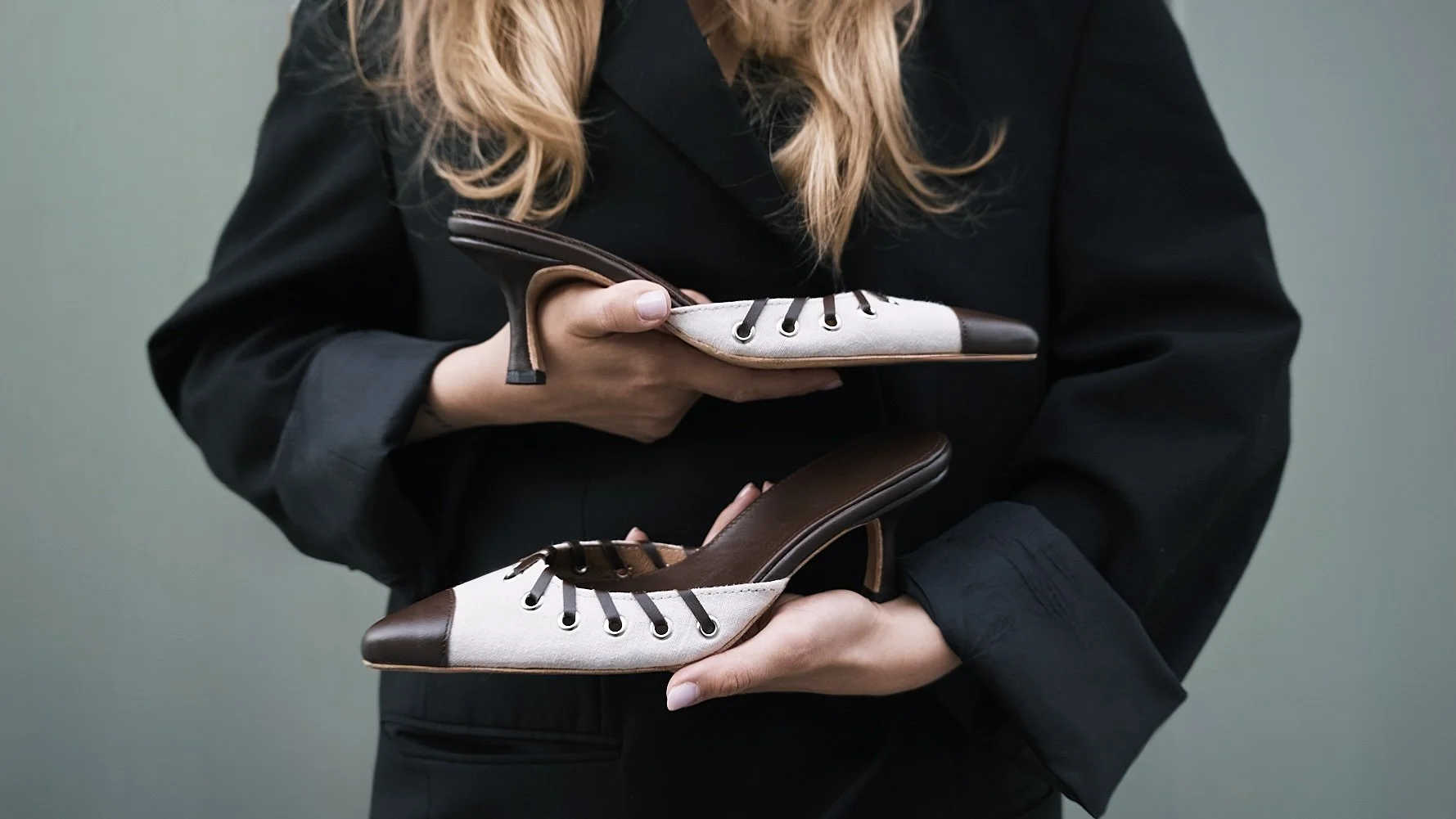
Mostly intuitively. I prioritise comfort above all, and most of my wardrobe consists of vintage or second-hand pieces. Paradoxically, I hardly ever wear heels, even though I keep adding more and more of them to my collection.
14. Which pair of shoes in your own wardrobe do you love the most – and is it because of the design, the comfort, or the story behind them?
It’s one of my most recent finds – a pair of low, powder-pink Manolo Blahnik pumps with a tied detail at the front, which I discovered at a pop-up organised by my friends from The Vault. I’m fascinated by how carefully they are made, by all the individual details, the materials and the choice of colours.
15. What is your biggest dream at this point? Your own brand, a collection, a collaboration with a fashion house, your own studio – or are you more drawn to a path you don’t want to define just yet?
As I said, I’m still learning everything and I don’t want to get ahead of myself. At this point, I would really love to do an internship somewhere in Italy or Spain, where I could continue developing my craft.