Working With What the Field Gives: The Philosophy Behind SAWAYA Studio
Rooted in seasonality, local sourcing and a deep respect for nature’s rhythm, SAWAYA Studio represents a different approach to floristry—one shaped by patience, observation and hands-on work. Founded by Klára, the studio grows from a personal need to slow down, reconnect with the land and create meaning through craft.
In this conversation, she reflects on the moment the idea was born, the beauty and challenges of working “with what the field gives,” the quiet poetry of autumn, and why community, sustainability and imperfection play such an essential role in her work.
Do you remember the moment when the idea to found SAWAYA Studio was born? What was the very first impulse?
From a young age, I felt close to nature and ecology, but for many years I worked behind a computer under constant pressure. Gradually, I started to realize that I needed something more creative, freer, and above all, work that involved my hands. A big part of it was also moving to a place with a garden. In the very first year, I dug up a small patch of land and started studying things I had never studied before. I visited farmers and tried to understand how everything actually works. It’s an incredibly friendly environment where people help and support each other. And honestly, I have huge respect for everyone in this field—it’s definitely not an easy job.
Your work is based on local growing and sourcing of flowers. What attracts you most about this path?
That’s true, although this year reminded me again just how demanding this kind of work can be. Already in June, I realized I had probably over-fertilized the soil in autumn, so the season turned out to be far from as easy as I had originally planned. Because of that, I often reached out to other farmers and sourced local flowers from them. Maybe it’s this unpredictability that attracts me. But above all, it’s the everyday connection with soil and nature, observing subtle changes, and having deep respect for conditions we simply can’t control. This mindset carries over into everyday life as well—you become much more aware of yourself and your own behavior. I love the entire process, from seed to a flower in a vase, the endless creativity and the ability to watch things grow, transform and come alive. And sometimes I wonder whether what I enjoy most about it all is actually the gardening itself.
What is it like to work “with what the field gives”? How do seasonality, unpredictability and the natural rhythm of the landscape shape your work?
Honestly, this is the most challenging part. A lot of it comes down to years of practice—which I’m still building. You really need to know the plants well and not set unrealistic expectations for yourself from the very beginning. I also grow vegetables, and at least those tend to work out every year. But it all starts with pre-growing seedlings in February, continues with sowing—which is a science in itself—and then each plant has its own specific needs. And then June arrives with a week of heavy rain or extreme drought, and everything can be lost. On the other hand, this is exactly where the endless creativity comes in. You’re constantly learning and discovering how much grows around us and how beautifully it can be used without having to be shipped halfway across the world.ver it is, the way you tell your story online can make all the difference.
“I love the entire process—from seed to a flower in a vase. Watching things grow, change and come alive never stops inspiring me.”
Is there a particular time of year when flowers inspire you the most?
I’m honestly excited almost every month. But this year, autumn completely won me over. I love it in general, but also in gardening—when things slowly come to an end, the harvesting, cleaning, plowing, and everything naturally starts to slow down. Combined with autumn colors and textures, which have a depth unlike any other season, it creates a special sense of calm and closure. That feeling of wrapping up the year resonates with me more and more.
What is your approach to winter arrangements? What inspires your holiday work?
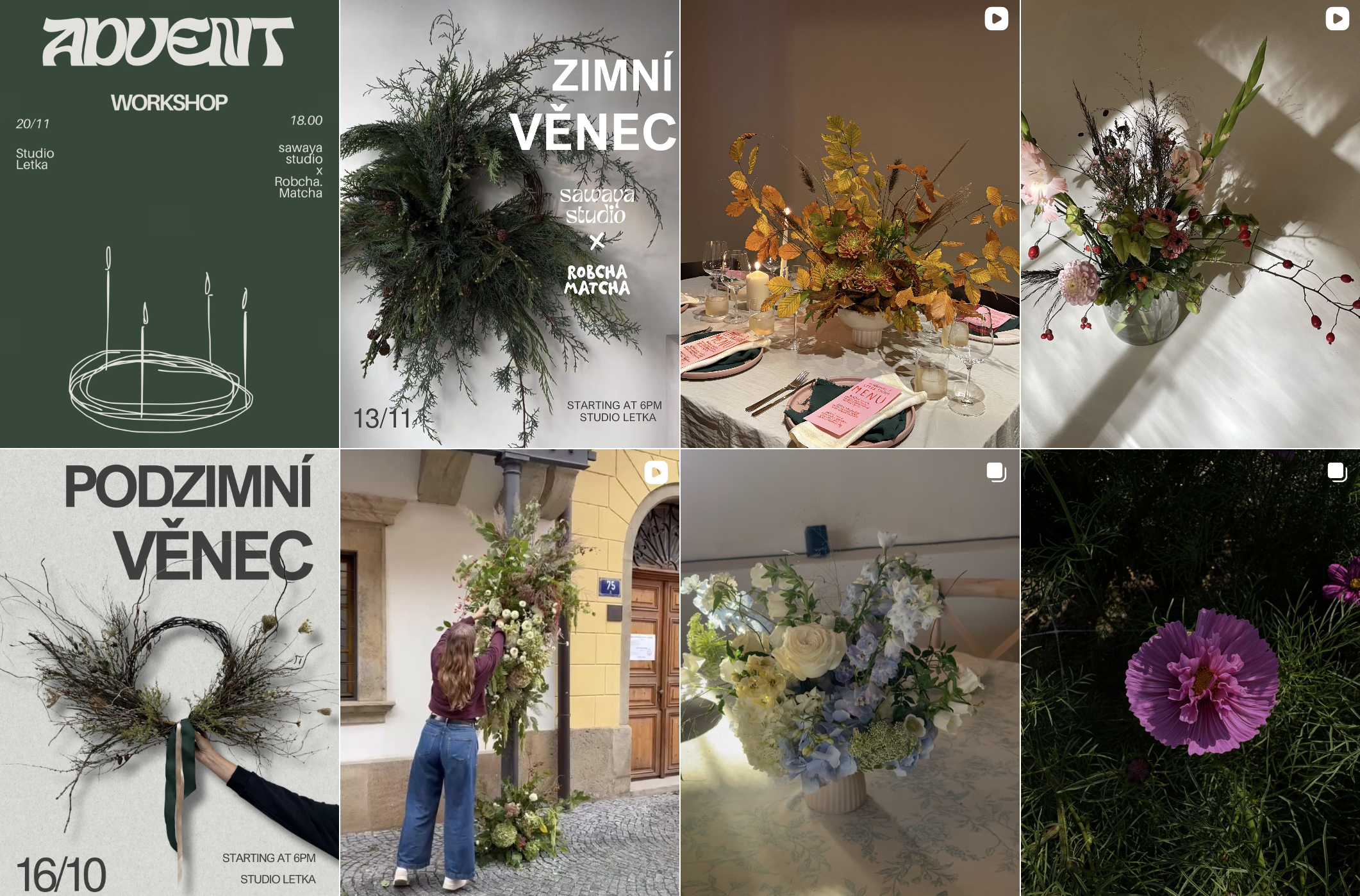
When it comes to arrangements, my priority is to avoid floral foam as much as possible, since it’s usually made from microplastics. Instead, I use wire mesh, kenzans or moss—natural, reusable and more sustainable alternatives. For installations, clients usually send me their vision, and I translate it into a seasonal form so that everything aligns with what’s currently growing. Sometimes we develop the concept together. And quite often, clients give me complete creative freedom. In those cases, I’m inspired by the space itself, its atmosphere, or the event. I usually visualize the composition immediately and then send the client a similar reference—often from Pinterest—so they can better imagine the final result.
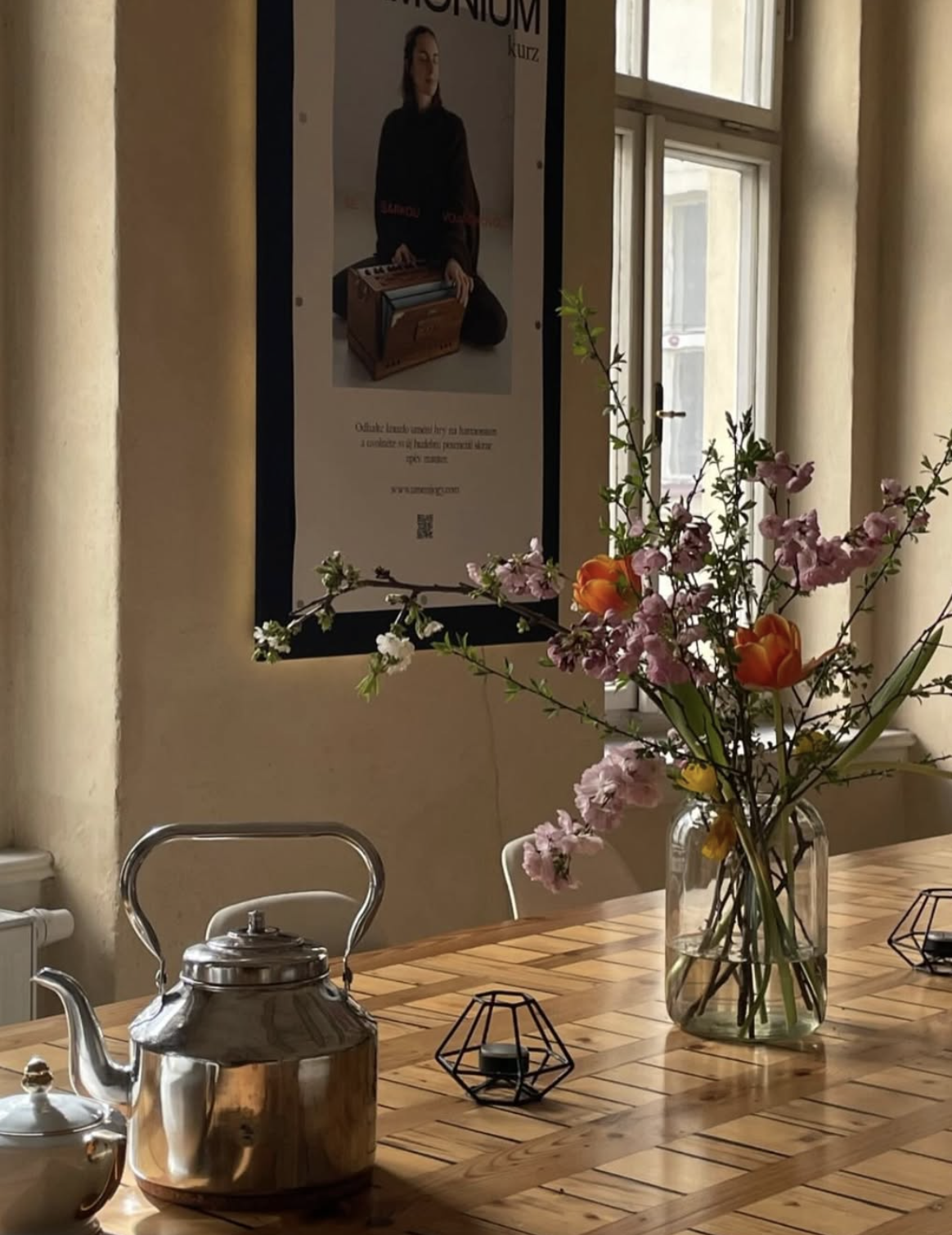
You collaborate with Prague-based spaces, yoga studios, and host workshops. How important is building a community around flowers for you?
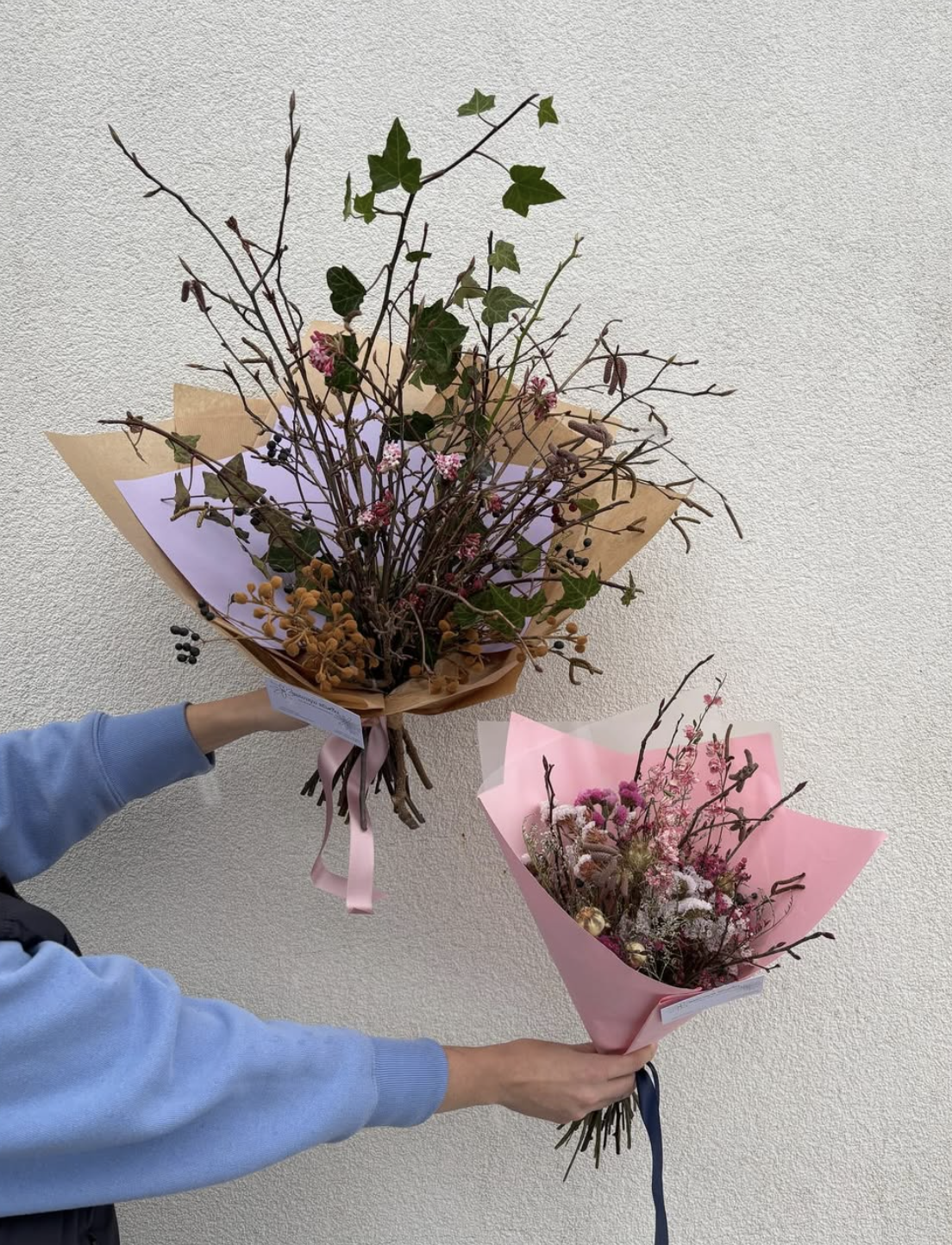
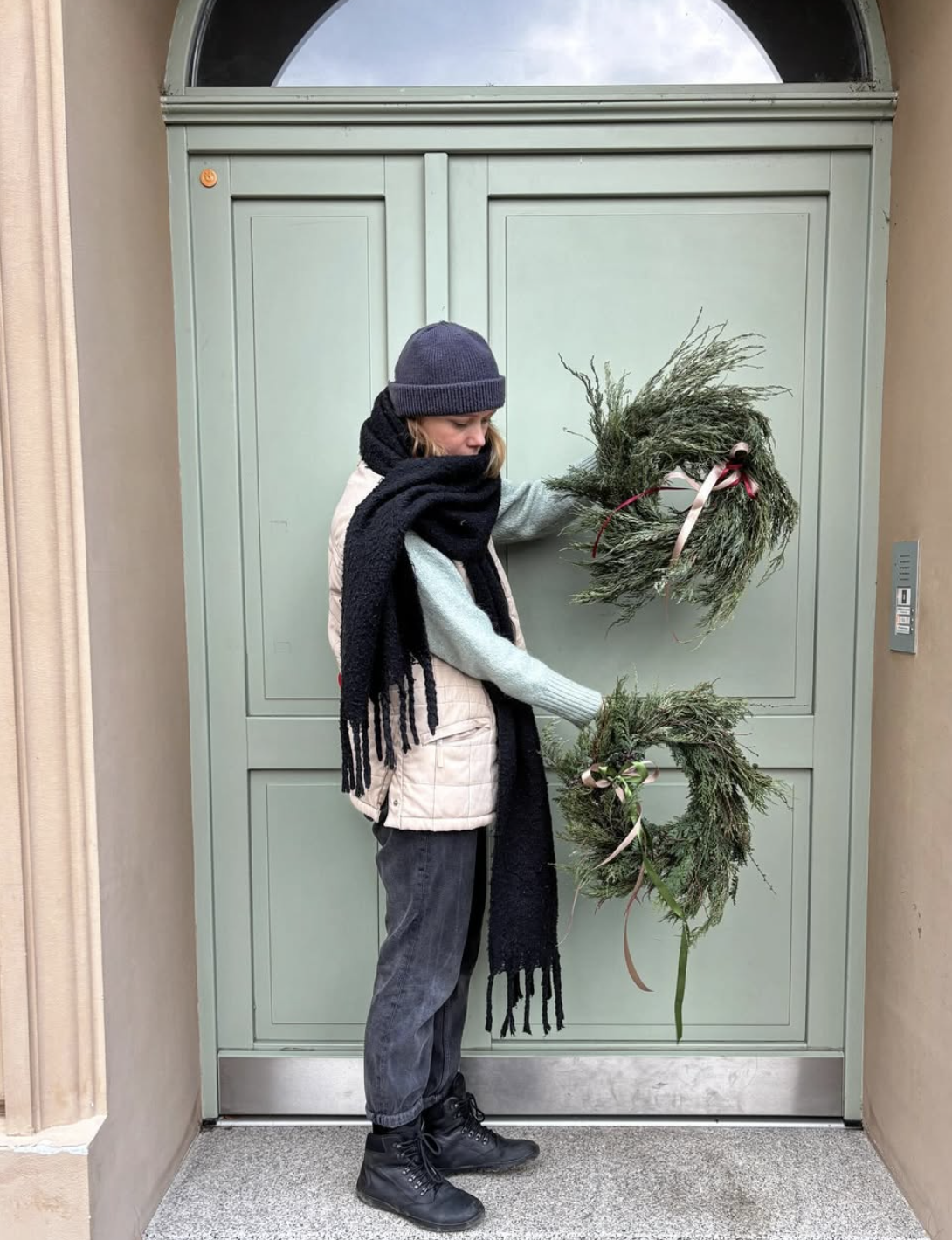
It often happens that when I’m working on an installation, people come up and start asking questions. I try to explain that floristry can be done differently—more sustainably—and that there are already many flower farmers working this way. There’s even a map of flower farms, so anyone interested can support local growers much more easily. That’s exactly why it all makes sense. But the biggest thanks go to everyone who thinks this way and reaches out—whether for an event, a weekly installation, or by buying a bouquet or wreath. Thanks to them, we’re visible and able to keep growing.
Looking back at this past year—what has it brought you professionally and personally?
So much, honestly. I can hardly believe how much I managed to do—how many places I decorated, how many events took place, how many beautiful bouquets and wreaths were created and sold. Professionally, it pushed me forward in plant knowledge, better planning of planting cycles, time management, and above all, learning to wake up at five in the morning to get everything done. Huge shoutout to all women balancing kids and careers. But most of all, I deeply value the people who reached out to collaborate. Thanks to them, I get to do meaningful work that truly fulfills me.
“Working with nature means accepting unpredictability. But it also teaches you patience, humility and a deeper awareness of yourself.”
What are you planning for the coming year, especially spring? Any new workshops, growing methods or collaborations?
I honestly haven’t had time to think about it properly yet. I’m planning to take January off by the sea, sit down calmly and at least plan the growing season. Something is already taking shape for spring with Studio Letka, but the details are still being finalized. And at the beginning of the year, we’re also shooting a winter editorial with Odmala Studio, which I’m really looking forward to.
Is there a flower you feel a particularly strong personal connection to?
I can’t choose just one, but among my favorites are scabiosa, cosmos, carrots, hellebores, corn cockles, various grasses, branches and weeds. I love how they add movement and structure to a bouquet and bring a slightly wild feeling. And of course, their longevity in a vase is a big plus too.
About the Founder
Behind SAWAYA Studio is Klára, who loves turning ideas into meaningful realities. She finds fulfillment in work that makes sense—to herself and to others—and in the opportunity to constantly learn and grow. The project also stems from her close relationship with nature, where she spends a significant part of her time. For Klára, honesty, integrity and creating with heart are essential values.