Marek Tichý: Fairmont Golden Prague is not an impenetrable fortress of luxury. It is an open dialogue with the city
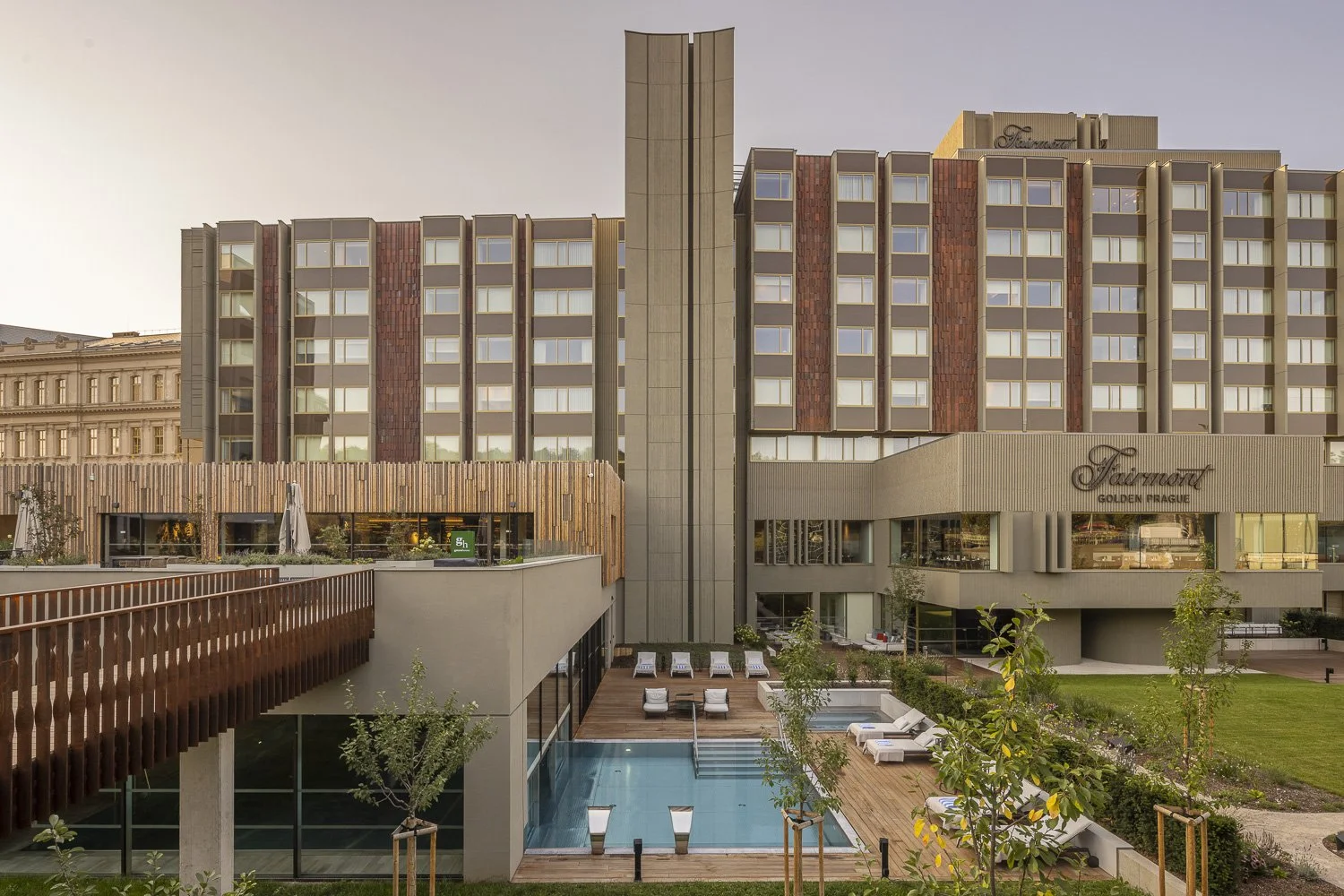
After a five–year reconstruction, a 1960s legend on the banks of the Vltava has awakened once again – the former InterContinental Hotel, now Fairmont Golden Prague. Architect Marek Tichý of TaK Architects gave the iconic brutalist building a new life without compromising its original spirit. His goal, however, wasn’t to create another closed luxury resort, but a place that breathes with the city – a hotel you can enter freely, whether for dinner, breakfast, a workout, or a drink overlooking one of the most beautiful views of Prague.
What was the main idea behind the reconstruction?
Two principles guided us from the very beginning. The first was to connect architecture with fine art in the sense of an ultimate collaboration between the architect and a team of artists, continuing the Gesamtkunstwerk tradition of the 1960s.
The second was to erase the boundary between the hotel and the city. We wanted Fairmont to become part of a living Prague – a place where people can come for coffee, an exhibition, or just to stroll through. And for Prague itself to gain a new experience – new perspectives of the Vltava, new places to discover.
How did the idea of an open gallery come about?
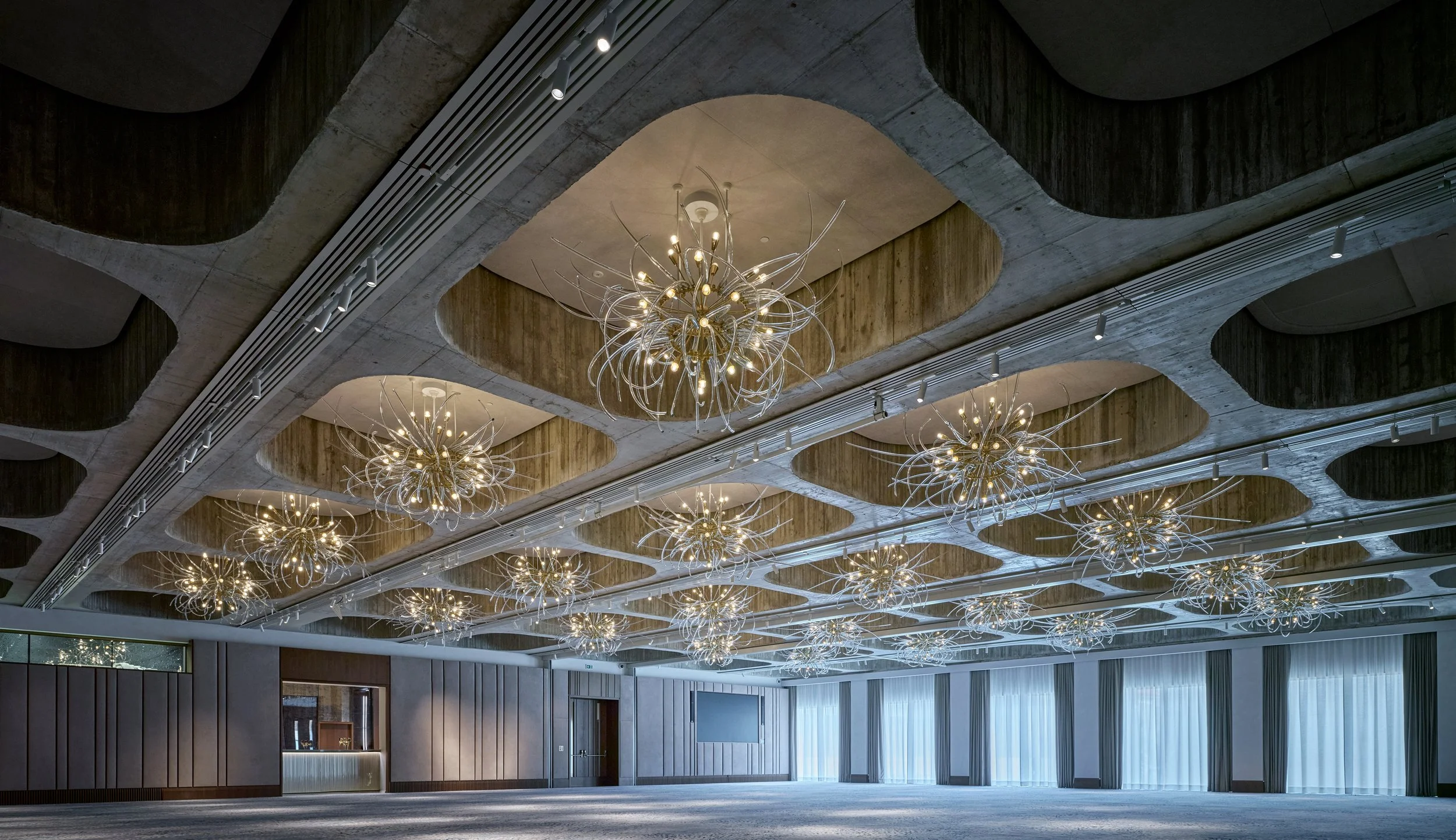
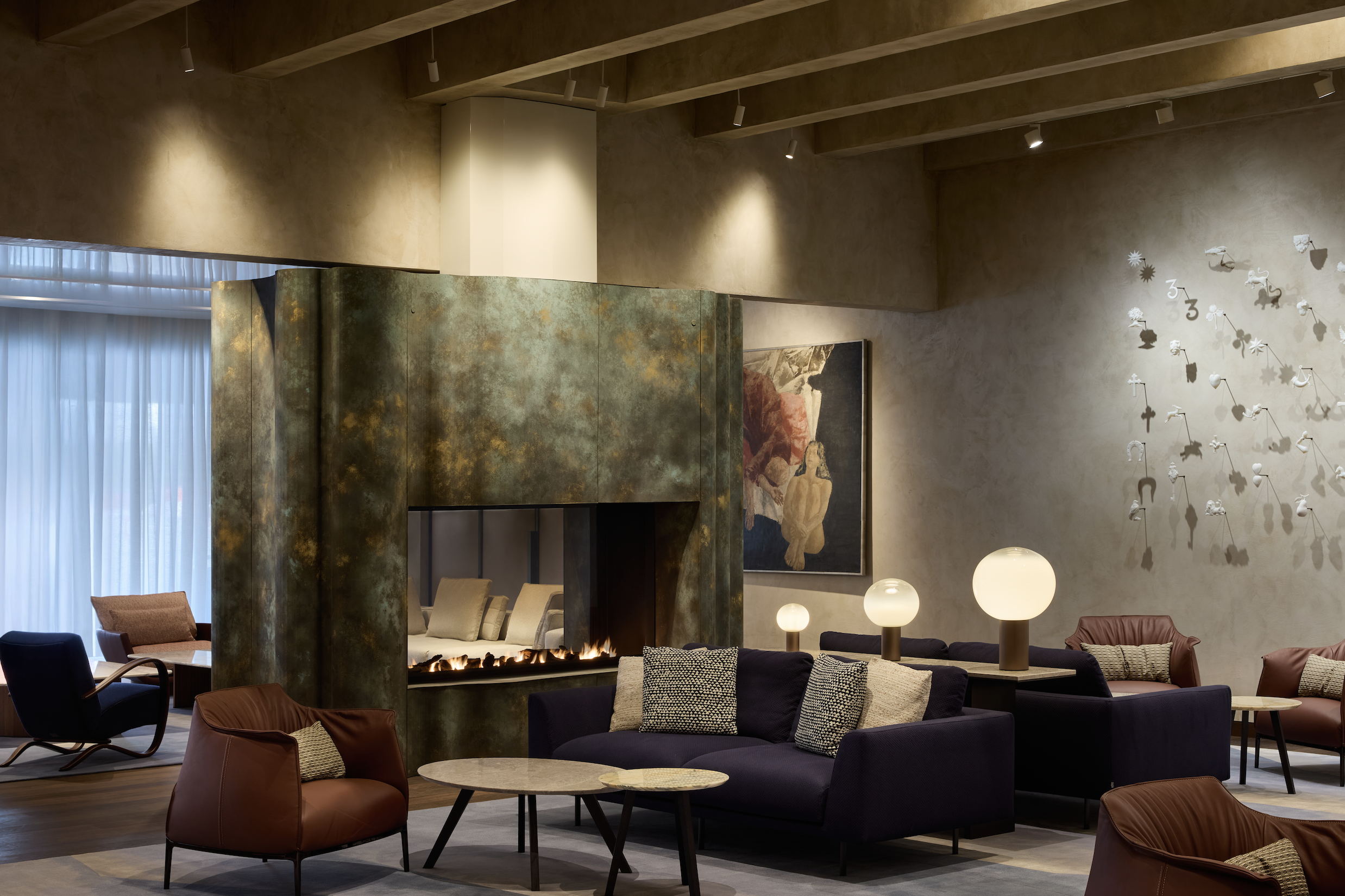
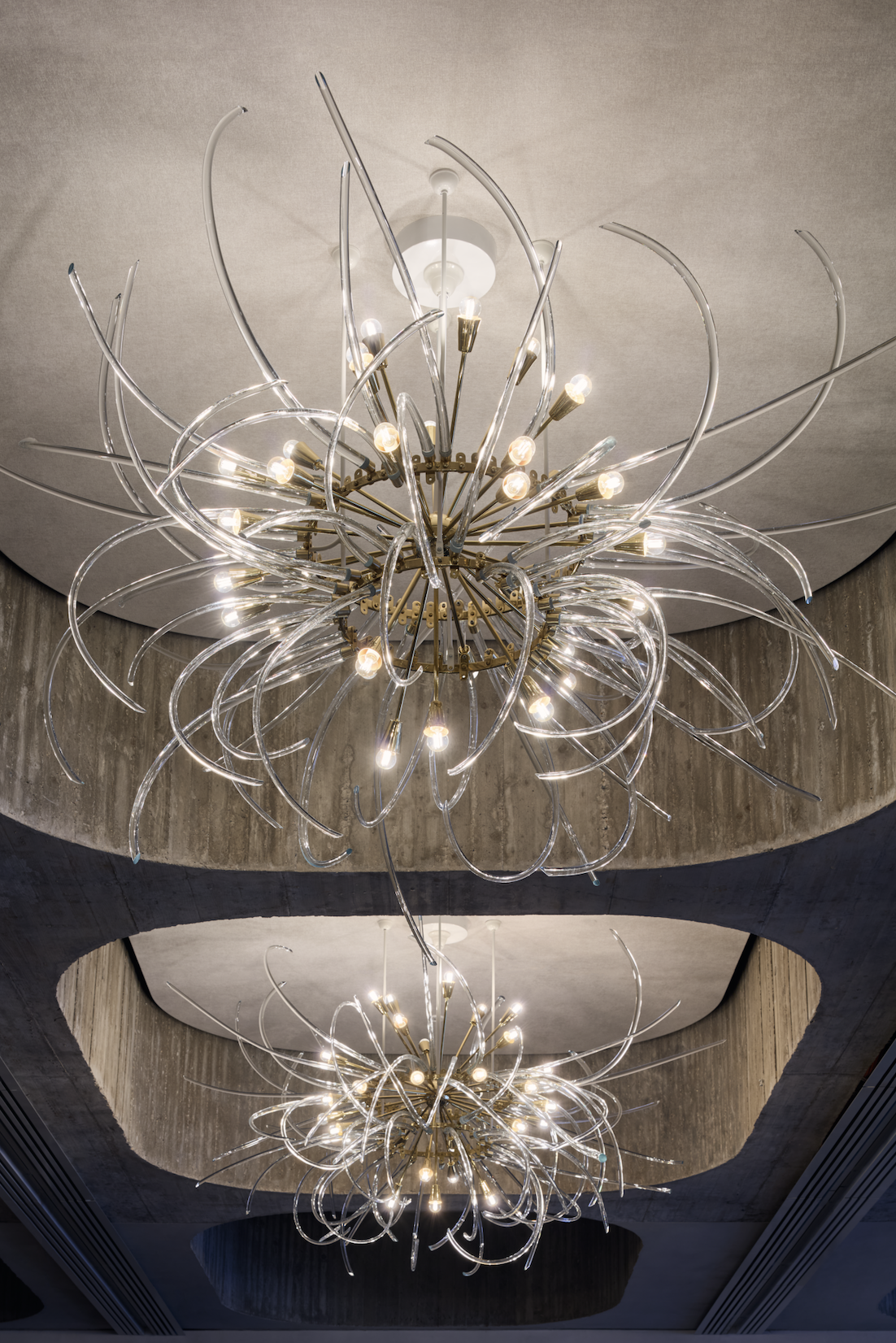
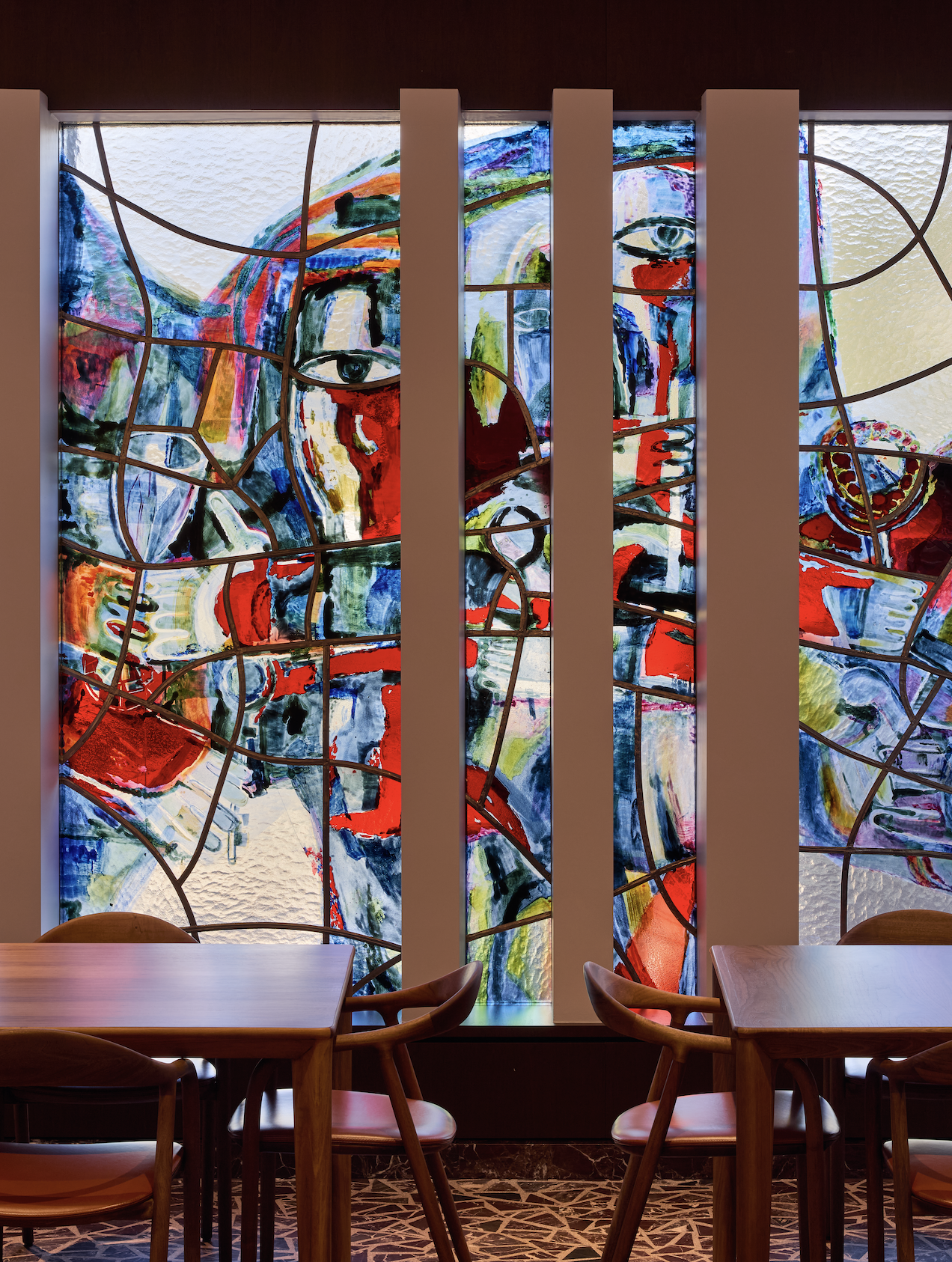
We conceived the hotel as a generous gallery where you can be in close proximity to original artworks. You don’t stand behind a rope – you have coffee beside them, you sit in interiors surrounded by art. Thanks to the owners, we were able to work with original pieces by Czech masters: wooden sculptures by Čestmír Kafka, works by Miloslav Hejný, gilded lighting by Hugo Demartini, glass castings by Stanislav Libenský and Jaroslava Brychtová with a continuation by Zdeněk Lhotský. In the conference hall, we rebuilt the concrete ceiling by Jan Šrámek with chandeliers by René Roubíček. This is where art and architecture truly merge.
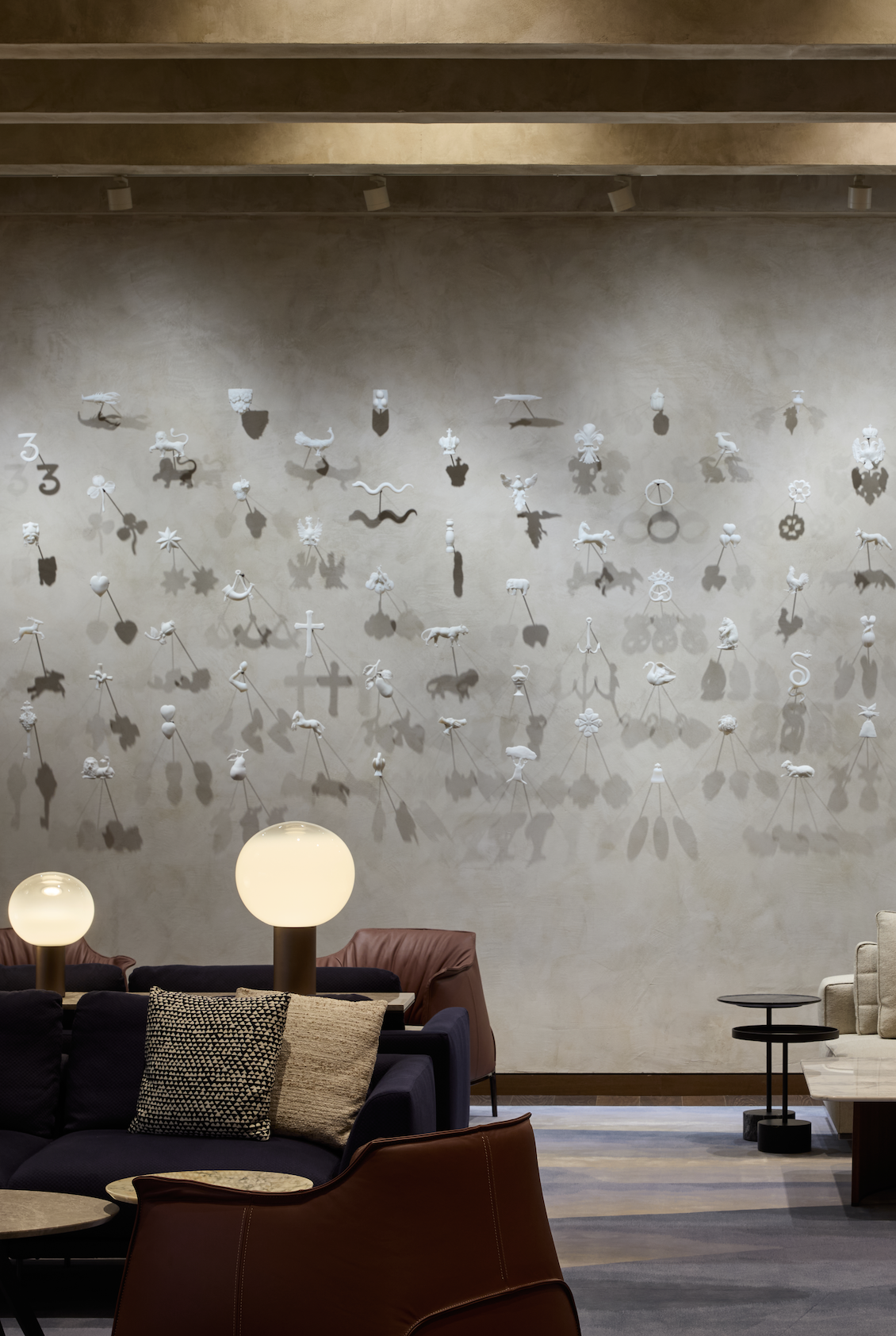
We wanted Fairmont to become part of a living Prague – a place where people can come for coffee, an exhibition, or just to stroll through
How did you manage to integrate art within the function of a luxury hotel?
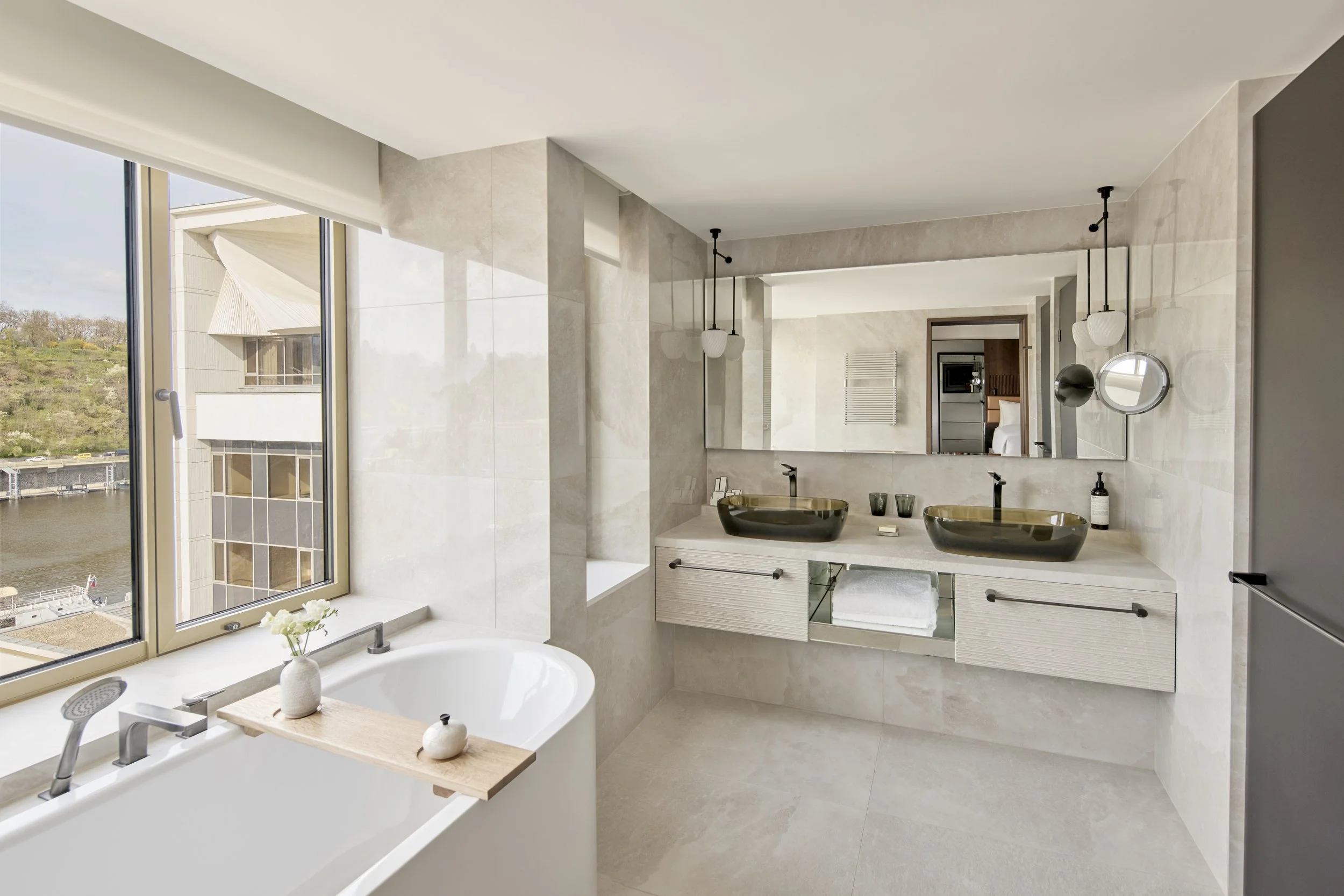
We wanted the artistic layer to be more than decoration – to be an integral part of the architecture. For example, the glass partitions in the rooms, created in collaboration with Lasvit and Wanda Valihrachová, are both a structural element and an artwork.
In the exterior, the artistic language continues through sculptures by Jaroslav Róna, installations in the tunnel, or a fountain made of translucent concrete – everywhere there is some layer of art. The lobby is dominated by Martin Janecký’s sculpture “House Signs of Prague”, symbolically inviting guests inside.
What did it mean to you personally to work with a building with such a strong legacy?
I didn’t have a personal relationship with the InterContinental, but I did with the place. We are a Prague-based studio, I love Prague, and our main motivation was the transformation of the public space at the end of Pařížská Street. The idea was to bring this devastated area back to life as a natural urban node. Over time, we realised how strong a generational testimony this building carries. We were rediscovering it – and trying to draw out a new life from it.
The reconstruction must have been a huge challenge.
It was a conversion in the purest sense. In 2020, very little of its original beauty remained. The building had been devalued by previous renovations. We had to rekindle the fire in what was left and create an entirely new solution. Every stone is new, yet everything feels authentic. We restored the interaction of concrete, glass and wood. The basic material palette was translated into ready-made objects, composed into various configurations, while holding onto one core thesis – the imprint of nature in architecture. Every part of the hotel is different – the bar has a different atmosphere than the wellness area. It breathes with the rhythm of the city. Each space is distinct, each element unique, yet all interconnected.
How did you approach the newly added structures?
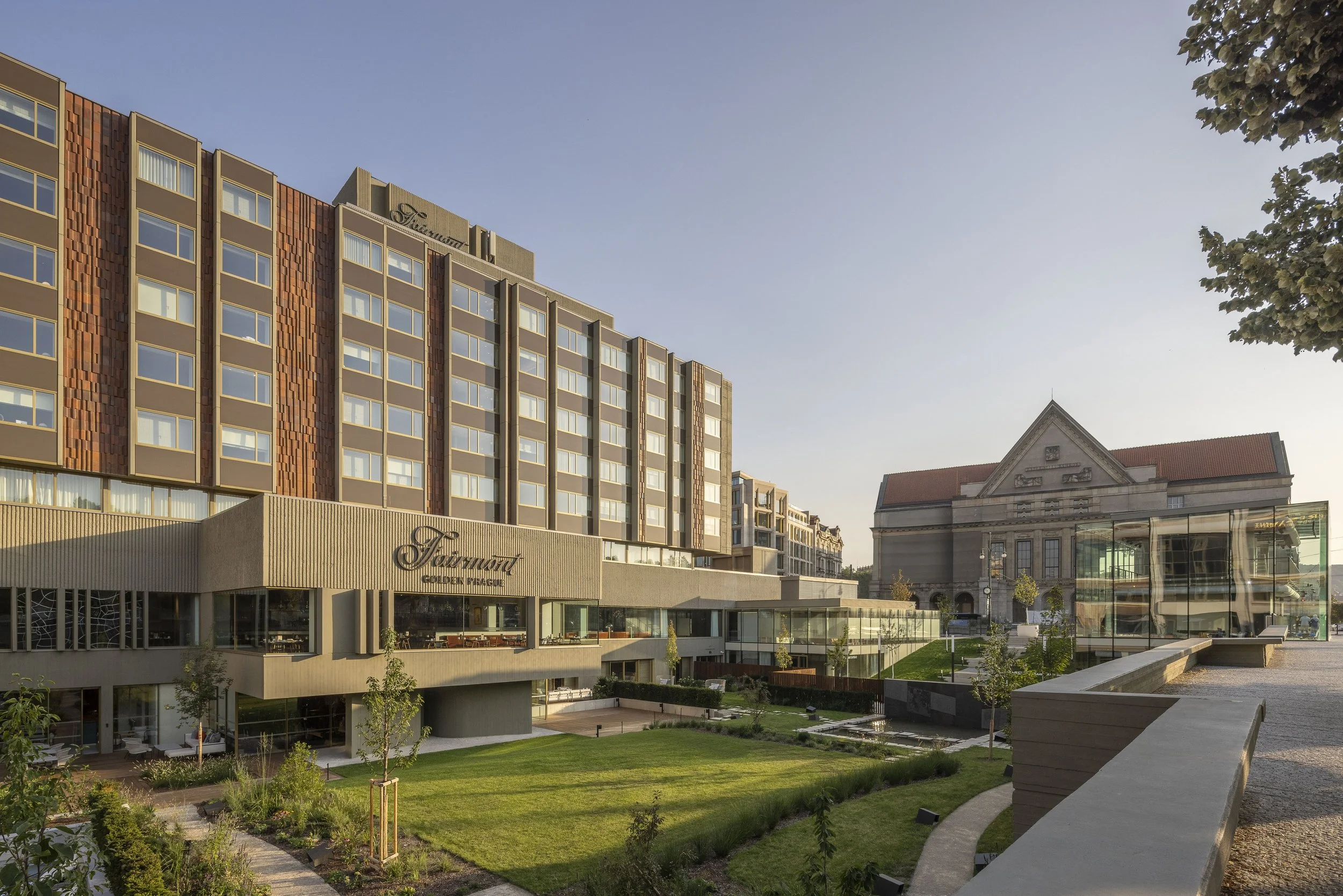
We reversed the original principle of a “heavy structure with vitrines.” The new additions build upon the brutalist base with more delicate structures – creating a kind of fragile glass shell that opens toward the city.
Your project is exceptional for its connection between interior and exterior.
We understood greenery as another layer of architecture. Every space is designed to connect directly with a garden, terrace, or the city. When the glass walls are opened, you practically find yourself in the middle of greenery. This is a completely unique phenomenon for a hotel operating in central Prague. At the same time, we wanted an authentic Old Prague garden – with fruit trees, herbs and vegetable beds, not an international bamboo plantation. In the Greenhouse restaurant, there are even herb beds that chefs use directly for cooking.
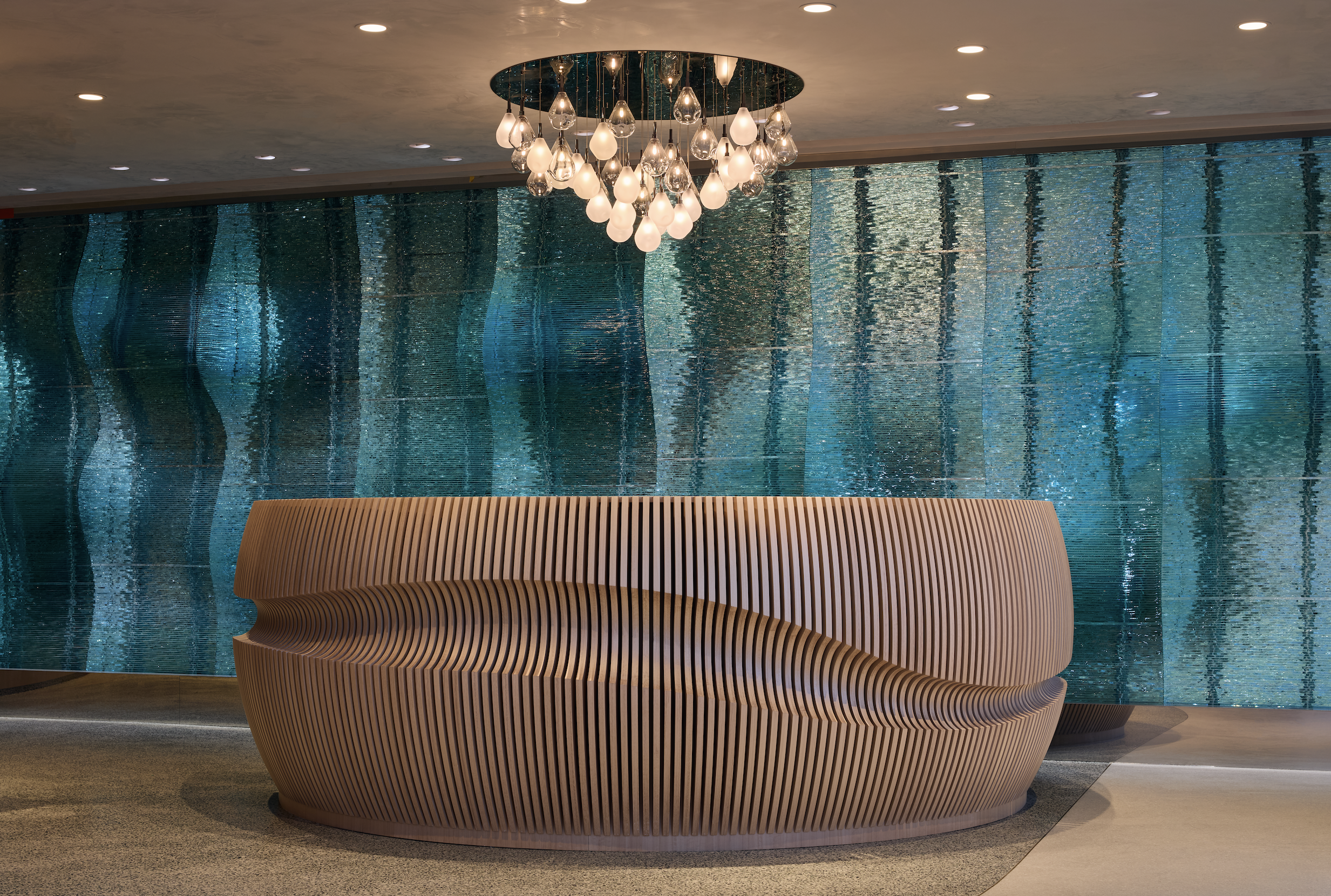
How important was it to connect the hotel with the city?
We didn’t want guests to be stopped by a reception desk or a pile of suitcases. Fairmont is open on all sides – you can enter the restaurant, gallery, or the small square by the river. A passage now leads from Pařížská Street all the way to the Vltava, with new greenery and water features. It is no longer an impenetrable fortress of luxury, but a living gallery where the city, art and people naturally meet.
What does Fairmont Golden Prague mean to you personally?
It represents five years of work and forty thousand square metres transformed into a dialogue between architecture, art, and life. Every detail was designed with the awareness that this place has a soul. But what brings me the greatest joy is that we opened the hotel to the public – that we democratised the whole site, which we renamed Staroměstská Gate.
The new additions build upon the brutalist base with more delicate structures – creating a kind of fragile glass shell that opens toward the city.
What can you experience at Fairmont Golden Prague?
Restaurants & Bars
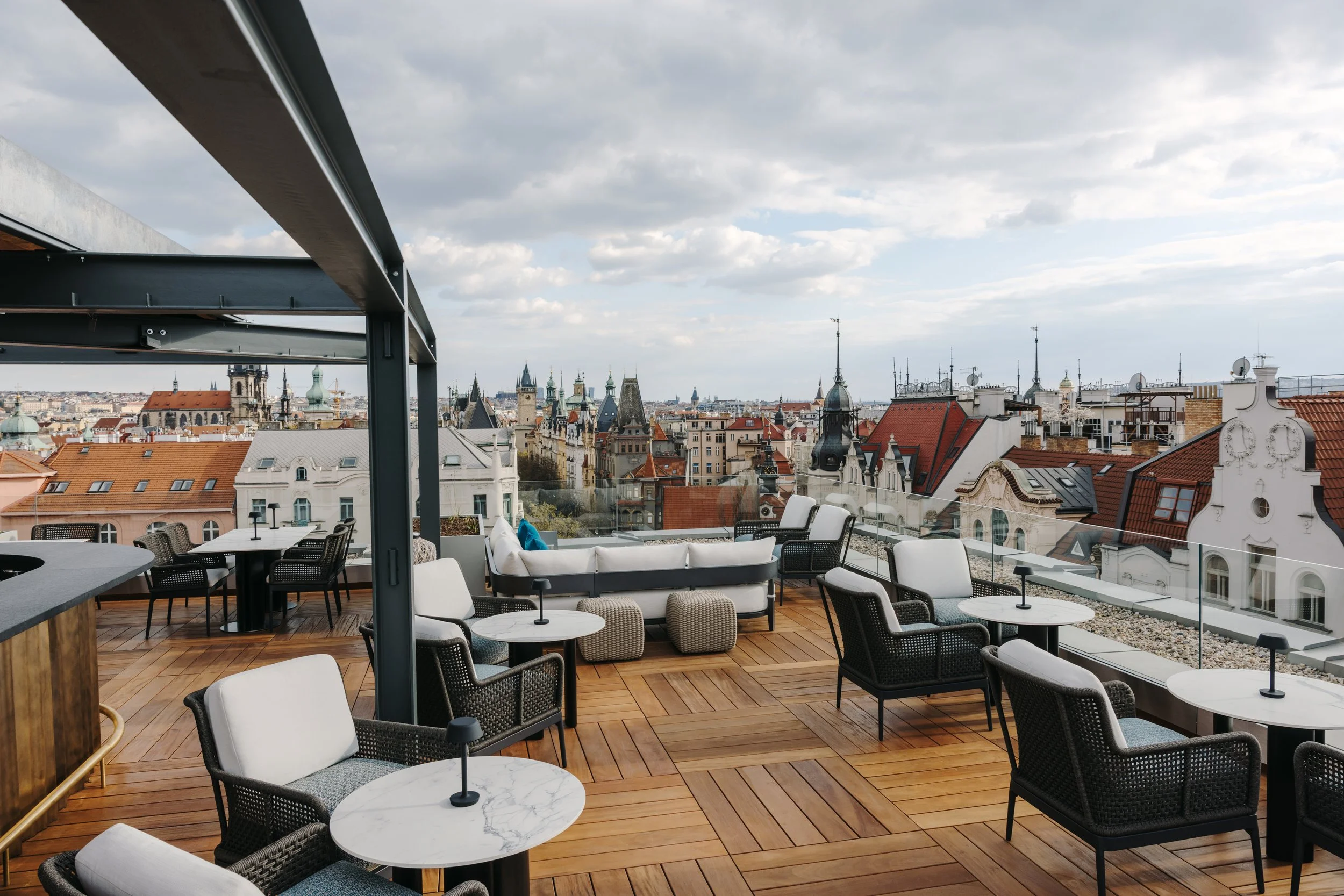
Six exclusive restaurants and bars: the fine dining restaurant Zlatá Praha, the stylish rooftop bar Golden Eye with panoramic views, the breakfast venue Kafka Brasserie, and additional concepts combining Prague’s character with an international spirit.
Wellness & Spa
Treatments focused on harmony of body and mind. A pool, sauna, outdoor whirlpool – a zen composition of wood and stone where the boundaries between interior and nature disappear.
Fitness & Relaxation
A modern fitness centre complemented by a relaxation zone designed for regeneration and calm.
Conference Spaces
A design-led zone open to both the public and private events. An ideal place for meetings, events, and cultural projects.